The Essential Indiana Lawn Care Schedule

~14 mins
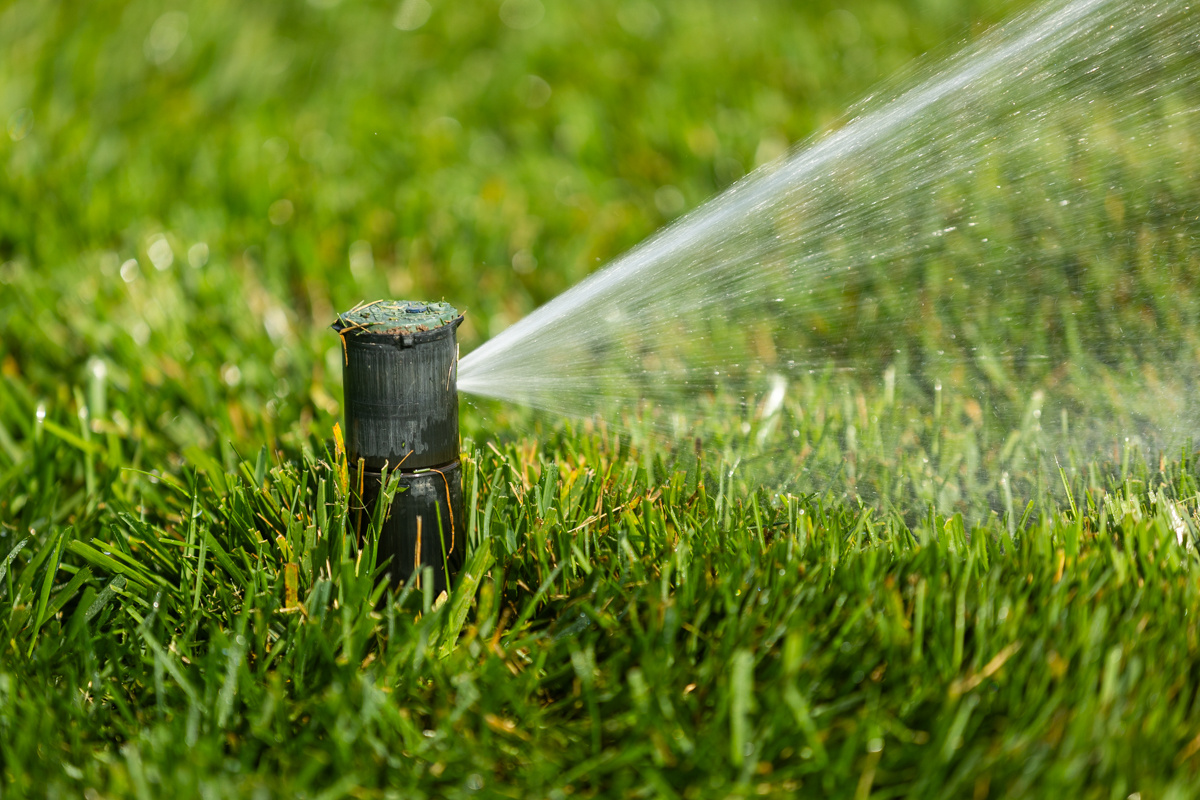
You’ve spotted a brown patch in your lawn. Your first instinct? Time to drag out the sprinkler, crank it on, and let it run.
Hold up.
That brown spot doesn’t automatically mean your lawn is desperate for water, and turning on the sprinklers at the wrong time or for the wrong reason can actually cause more harm than good.
So, what is the best irrigation watering schedule? The ideal window is early morning, right before the sun comes up. But timing is just one piece of the lawn watering puzzle.
We'll break down:
Why a Lawn Sprinkler Schedule Matters
The Best Indiana Irrigation Practices
Watering Lawns with Different Types of Sprinklers
Partnering with Professional Lawn Care
If you have resided in Indiana for any period of time, you likely know that our weather has a personality all its own. Your lawn needs to be ready to hold its own when constantly presented with:
Wet springs
Humid summers
Surprise dry spells
Stretches of heat that can stress your turf quickly mean your lawn has to be ready to fight.
That’s why having a thoughtful lawn sprinkler system really matters. Cool-season grasses, the ones that are common here in Indiana, thrive in the spring and fall. When summer rolls in, they go into survival mode. Without consistent moisture during those stressful, hot stretches, your lawn can thin out, struggle to bounce back, and become more vulnerable to weeds and disease. Unfortunately, too much water can create similarly undesirable results. A consistent lawn sprinkler schedule helps your lawn stay steady instead of swinging between soaked and scorched.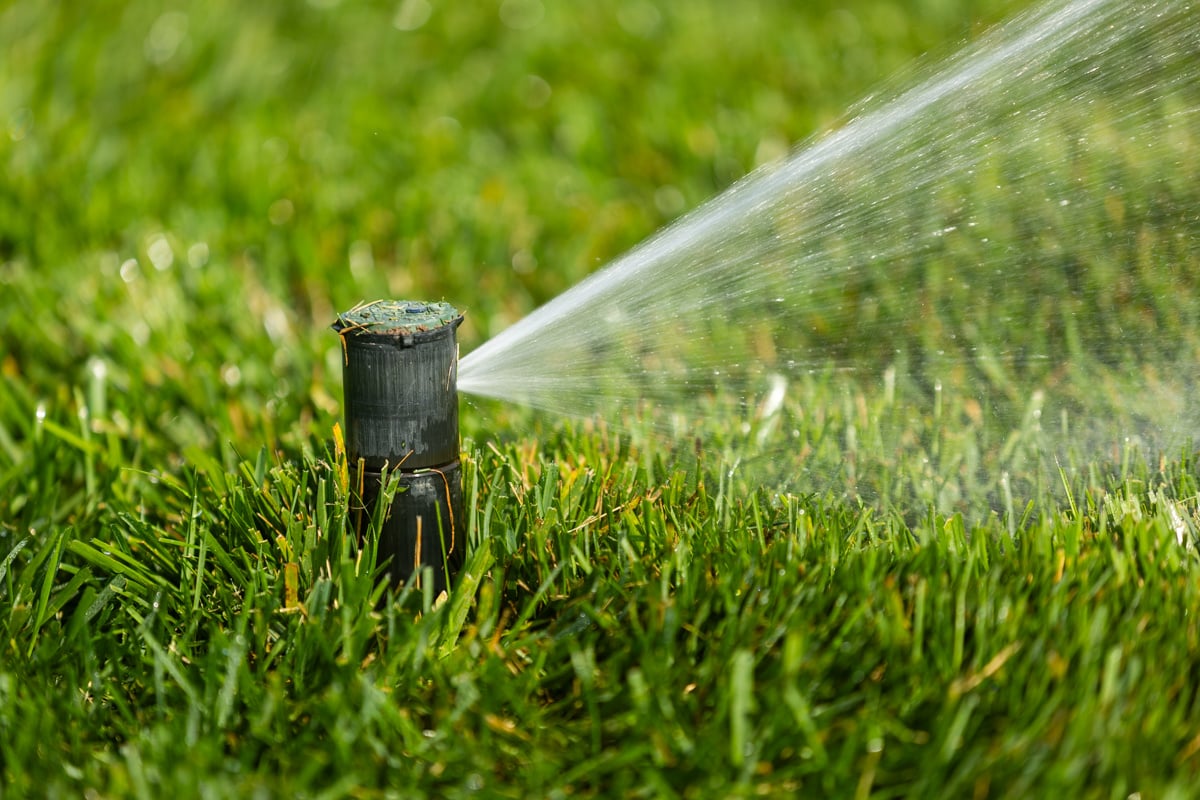
Soil plays a bigger role than you may realize as well. Established lawns that have been in place for years typically have higher organic matter and more carbon built into the soil. This improves CEC (cation exchange capacity), which simply means the soil can hold onto water and nutrients more effectively. These more mature soils don’t need nearly as frequent watering because they are better at storing and releasing moisture to the roots as needed.
New construction lawns or recently disturbed soils are a different story. When topsoil has been stripped, compacted, or graded, there is less organic matter and weaker soil structure. That means water tends to drain faster. If you seeded last fall, don’t forget your lawn is still what we consider baby grass. It may look green and full this spring, but those roots are still developing. Mature turf can better handle short periods of stress.
In Indiana, the best watering schedule isn’t one-size-fits-all. It truly depends on our climate, your soil conditions, and how established your lawn is.
Unfortunately, there is not a single ‘perfect’ watering formula we can recommend that works for every lawn. Soil composition, sun exposure, slope, age of the turf, what you are using to water, and how the lot was graded during construction can impact how your lawn holds and uses water. Let’s break down some practical tips that you can apply to your turf, no matter its age or your lawn's conditions.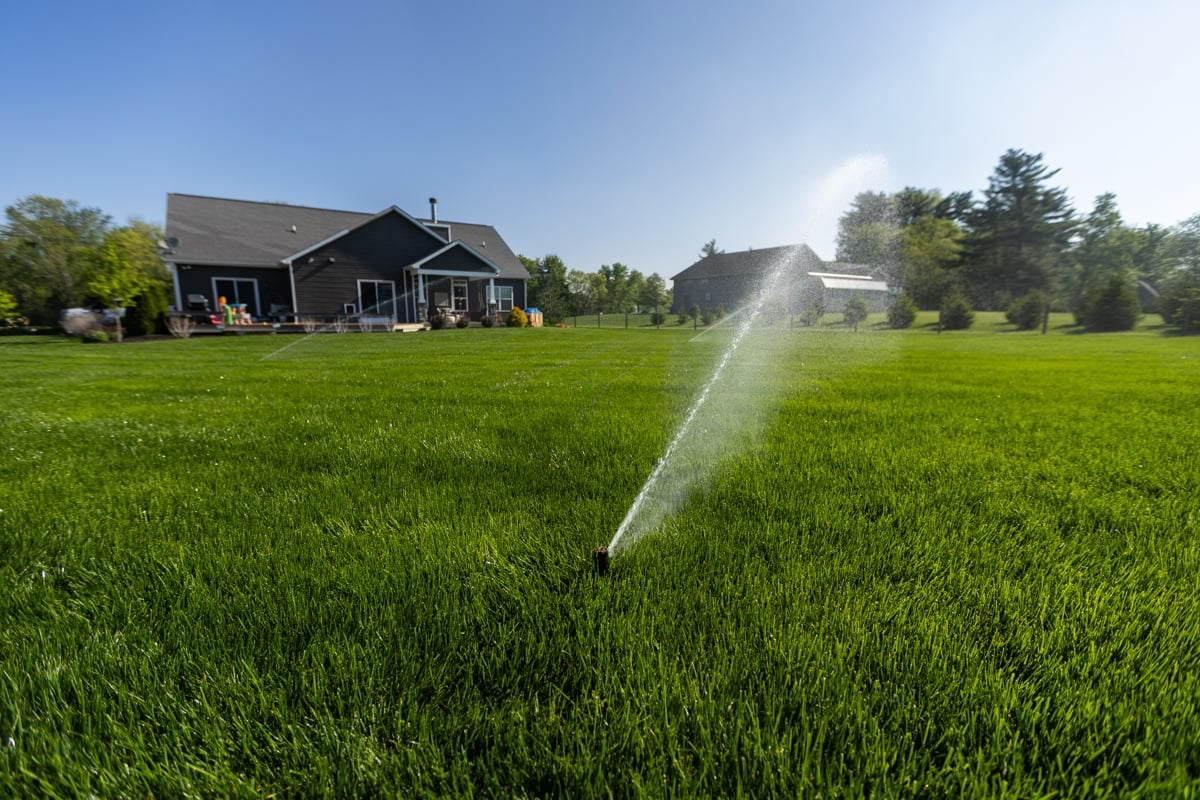
Timing really does matter when it comes to watering your lawn. The best irrigation watering schedule starts in the early morning, ideally between 2:00 a.m. and 5:00 a.m. This window gives you the best of both worlds: efficient water use and healthier grass.
Nighttime watering might seem ideal. It’s cooler, there is less wind, and evaporation is low. However, leaving your grass blades wet all night creates the perfect breeding ground for fungal disease. Prolonged leaf moisture is one of the fastest ways to invite trouble into your lawn.
Early morning watering means that your grass has a chance to dry quickly once daylight and air movement kick in. You can get deep soil hydration without extended leaf wetness. If you have a larger lawn with multiple irrigation zones and can’t run each zone during that early-morning window, don’t stress. A simple solution is to water half your zones one day and the other half the next day. That way, you are still prioritizing proper timing without running your system into the evening hours.
Instead of watering automatically because you see a little brown, pay attention to drought stress signals. Grass under drought stress will look slightly dull and may leave footprints that don’t immediately bounce back when you walk across it. If it does bounce back later in the day, you can likely wait on watering. If it doesn't recover, that is your cue to get watering. Brown does not automatically mean turn the sprinklers on as it can sometimes signal disease, which watering will make worse.
How long you run each zone depends heavily on:
The type of sprinkler heads you have
The output of your system
Your soil type
The current weather conditions
An 85-degree sunny, windy day can dry soil quickly. In especially hot and breezy stretches, you might feel like you could water constantly and still struggle to keep moisture in the ground. In other weeks, your lawn can hold moisture just fine as the conditions are milder.
In general, many systems need between 20 and 30 minutes per zone to achieve proper saturation, but it is not a universal rule. The goal is to water deeply enough to soak the root zone without causing runoff. For example, if you water for 30 minutes and notice ponding or water running off, you’ve likely hit your soil’s absorption limit. That is your signal to back your watering times down a little bit. Water should be soaking in, not running down the driveway.
Remember, overwatering can lead to shallow roots, high disease risk, and runoff. Underwatering leads to turf stress, thinning grass, and increased weed pressure. The goal is deep watering that soaks the root zone without ponding, followed by a dry period that encourages strong root growth.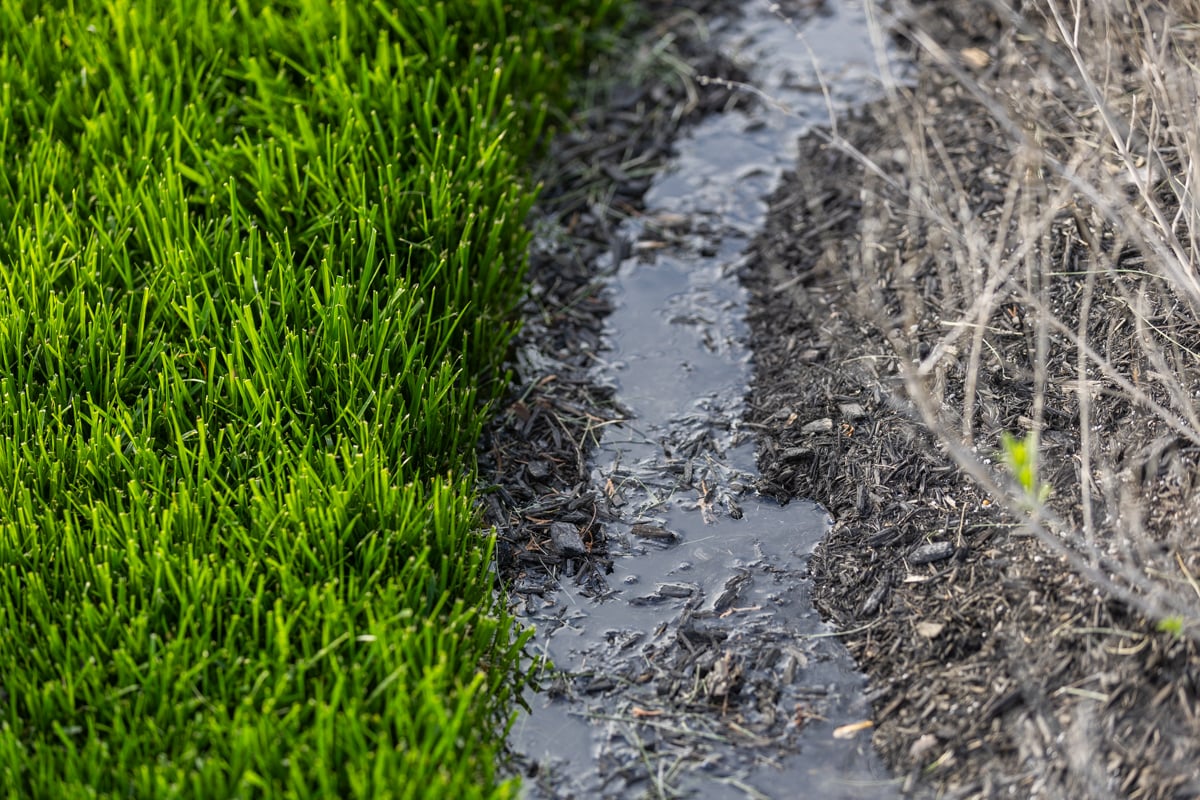
It is important to recognize that not all lawns are shaped the same, and not all sprinklers are installed in a way that can handle irregular shapes. Long, narrow strips are especially tricky. A traditional oscillating sprinkler usually cannot distribute water evenly in that space. More precise sprinkler heads can make a big difference in these areas. Some nozzles are even specially designed for throwing water 5 feet out and 15 feet to the side. In any case, there are solutions to create an irrigation system that works for your lawn. Talking with your irrigation contractor to ensure you have the right heads in the right locations can make a big difference.
If you are not utilizing an automatic sprinkler system, using a manual timer is essential to ensure you are not over- or under-watering your lawn.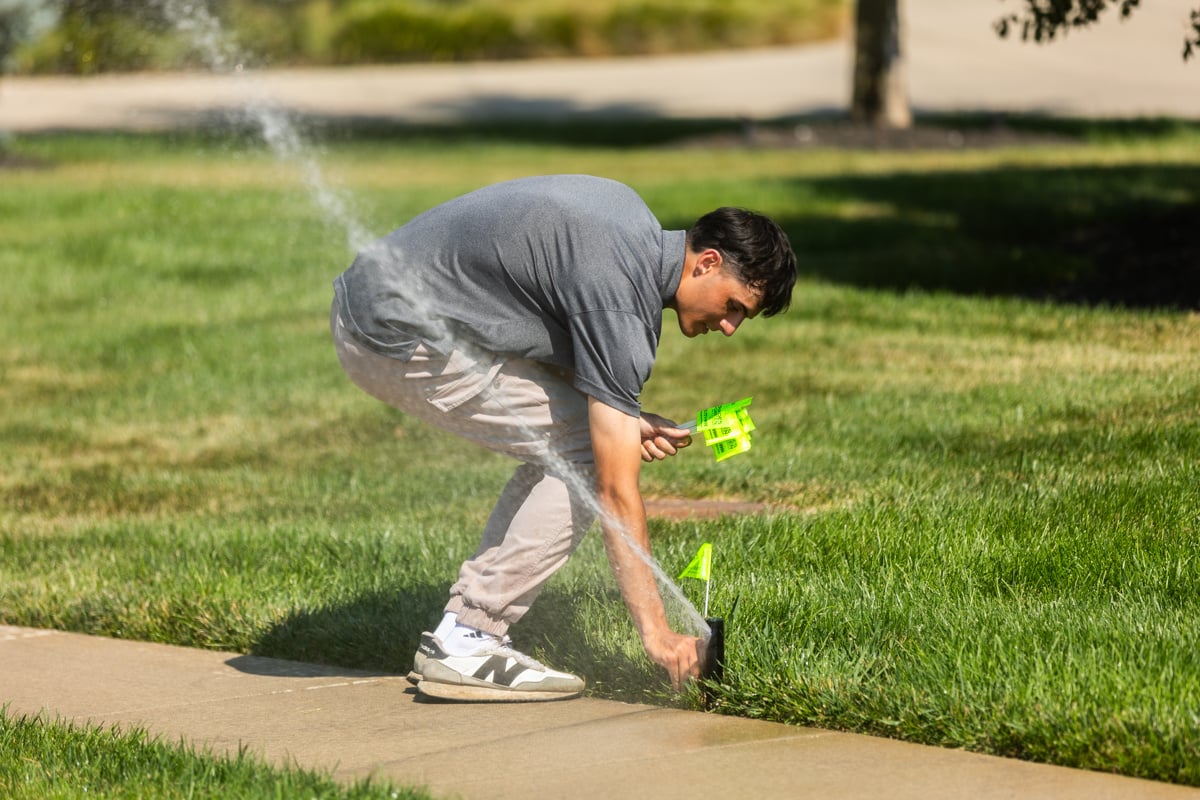
Watering might seem simple, but it plays a huge role in the overall health of your lawn. Even the absolute best lawn care program can result in a struggling lawn if watering is not properly dialed in. Too much, too little, or poor timing can all undo the progress your lawn care team is working hard to achieve.
At Shades of Green, our goal is to partner with you to care for your lawn. From soil health to seasonal watering recommendations, having the right guidance can make all the difference.
Need a little help figuring out the best watering practices for your turf? We’d love to help. Get started by filling out our contact form today.
Envision a Brighter Future for Your Lawn


Cory is the heart and soul of Shades of Green. His dedication to doing right for our customers has been the driving force behind the company's success. With a degree in Turf Science from Purdue University, Cory continually strives to craft the best treatment plans using the latest technologies and innovative products, ensuring top-notch results for every client.