Say Goodbye to Weeds: When to Apply Weed Control in Indiana

~5 mins
You mow. You water. You step back feeling pretty proud of yourself. Then…there it is. Sunny yellow dandelions sprinkled through your turf, and a patch of crabgrass spreading like it owns the place.
For many Indiana homeowners, weed control can feel like a constant battle. One of the biggest reasons it is so frustrating is that not all weed control works the same way. Pre-emergent weed control focuses on stopping weeds before they sprout, while post-emergent weed control targets them after they have already popped up in your lawn. Both are important, but timing, weather, and the type of weed you are dealing with make all the difference.
Let’s break down the key differences between pre-emergent and post-emergent weed control, explain when each should be used, and show how a well-timed, season-long approach can make weed control much more effective.
Jump To:
What are the Different Kinds of Weed Control?
When to Put Down Pre-Emergent in Indiana
When to Apply Post-Emergent Weed Control
Why Timing Matters for Weed Control
Breaking Down the Shades of Green Program
Partnering with Shades of Green for Weed Control
Not all weeds popping up in your turf are the same, and neither are the products used to control them. Lawn care professionals typically break weed control methods into two main categories: pre-emergent herbicides and post-emergent herbicides. The difference comes down to both when the weed is targeted and what type of weed is being controlled. Understanding how each type works helps explain why timing is everything when you want a weed-free Indiana lawn.
Pre-emergent herbicides work before weeds become visible. These treatments make a barrier in the soil that stops some weed seeds from germinating. In Indiana, pre-emergent weed control is primarily used to stop grassy weeds, like crabgrass, which can take over a lawn very quickly if left untreated.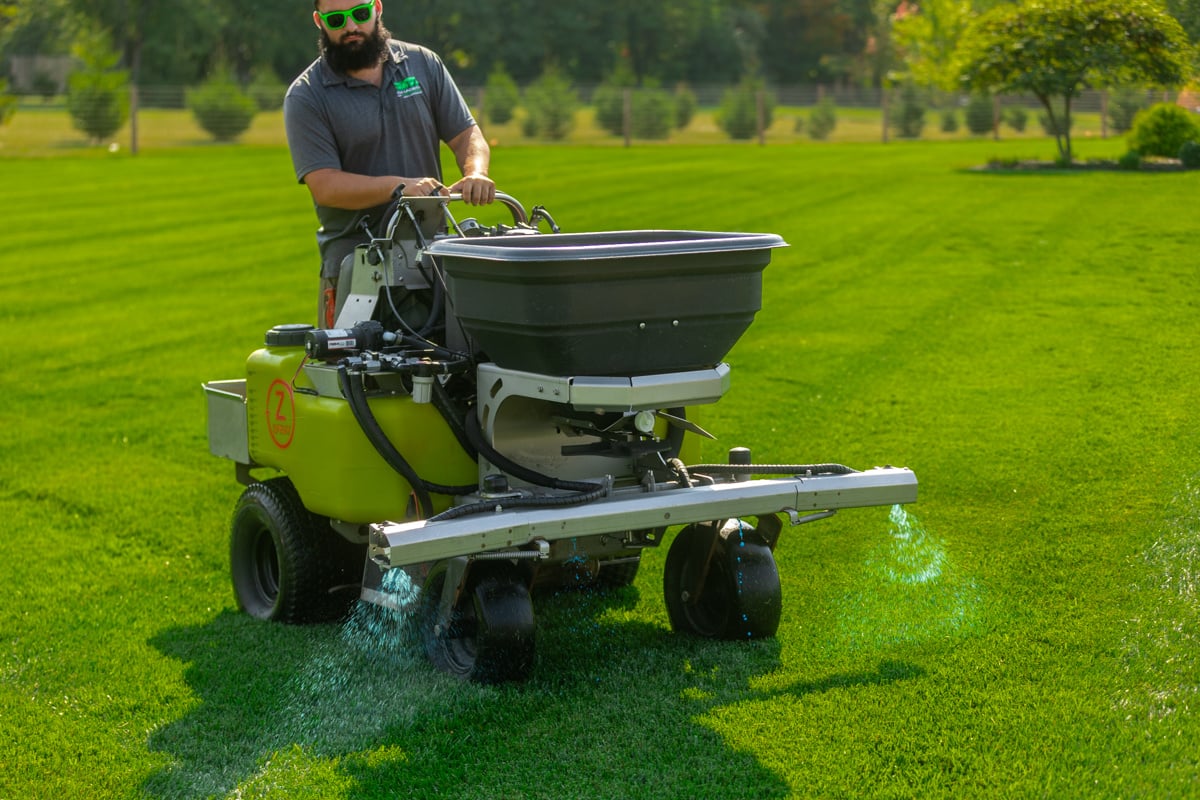
It is important to understand that pre-emergents do not kill existing weeds, and are not practical for killing broadleaf weeds, like dandelions. While there are specialty products that can tackle some broadleaf weeds, they are extremely expensive and not a realistic or effective solution for most homeowners. Overall, pre-emergent weed control is all about prevention, stopping weeds before they germinate and begin growing in the first place.
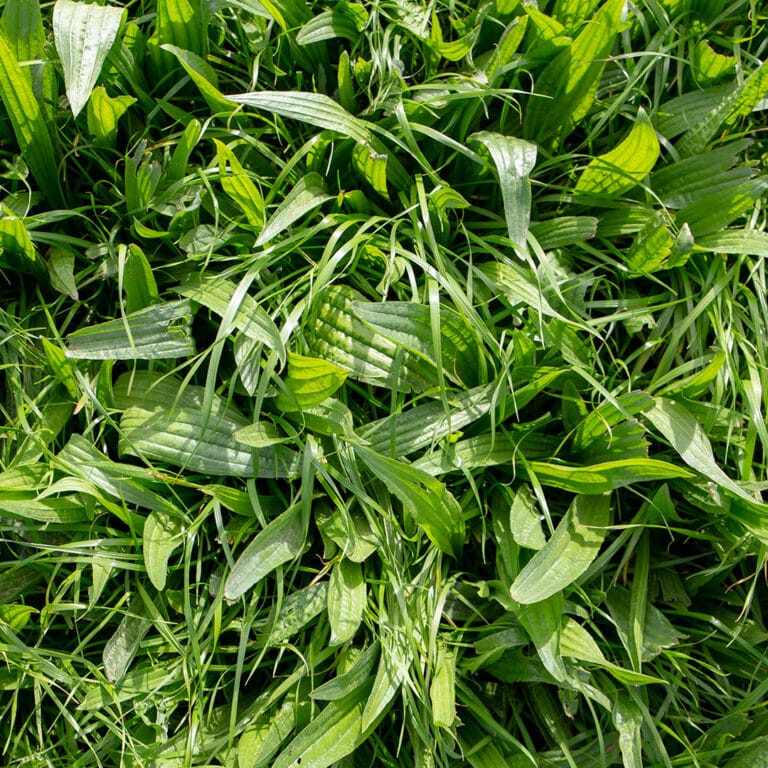
Post-emergent weed control is designed to control weeds after they have sprouted and are actively growing. These treatments target weeds you can actually see (annoying, right?) in your lawn and are commonly used to control broadleaf weeds like dandelion and clover.
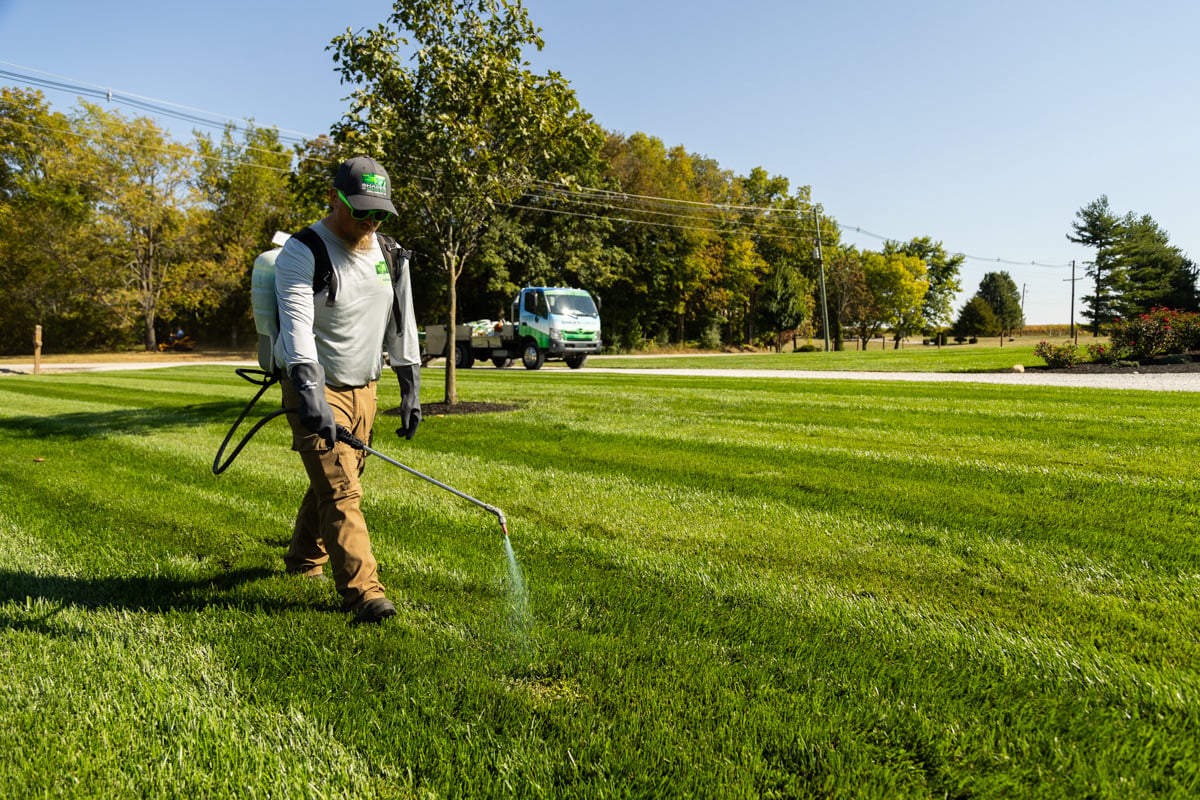
Post-emergent weed control works by being absorbed through the leaves of the weed, disrupting the growth, and ultimately killing the plant. Some products are selective, which means they can kill a specific weed without harming your grass, but others are non-selective and should be applied very carefully so they don’t harm your grass or other plantings.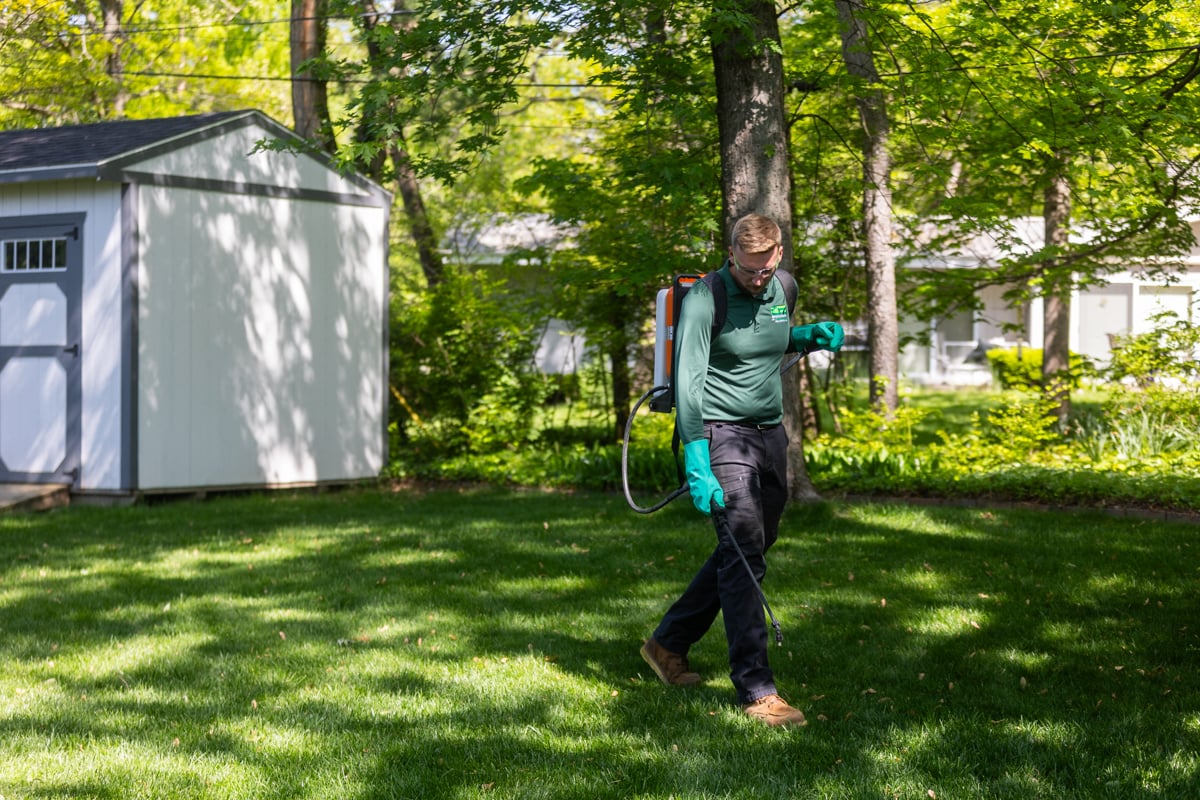
Using this type of weed control is especially important throughout the growing season when new weeds pop up despite preventative measures. A customized weed control program must contain both pre-emergent and post-emergent weed control products.
Timing is especially important when it comes to pre-emergent weed control. Because these products work by preventing weed seeds from germinating in the first place, they must be applied before weeds ever start growing. If it is not applied in time, it simply does not work. As a result, in our unpredictable climate, we have found that a one-time application is simply not enough.
A fall pre-emergent application is just as important, if not more important, than spring treatments. In fact, fall is a critical time to stop winter annual weeds, like chickweed and henbit, from establishing themselves and taking over your lawn in early spring.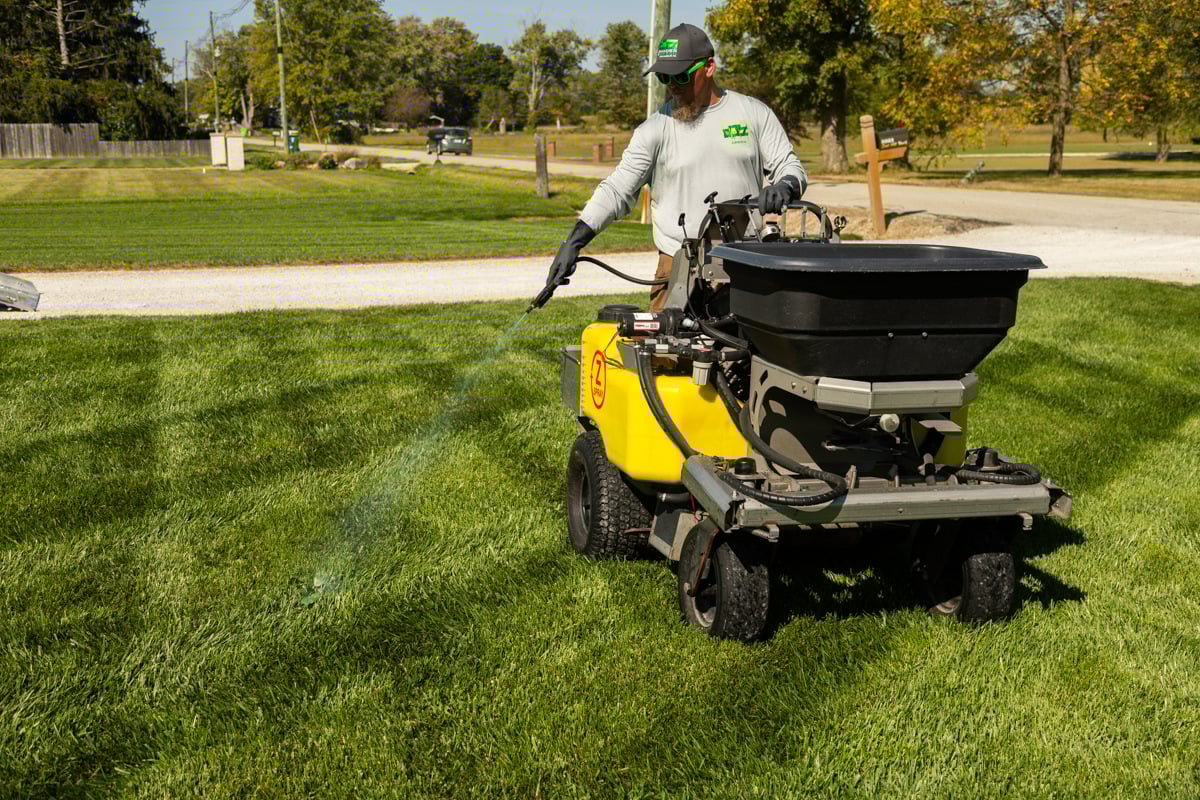
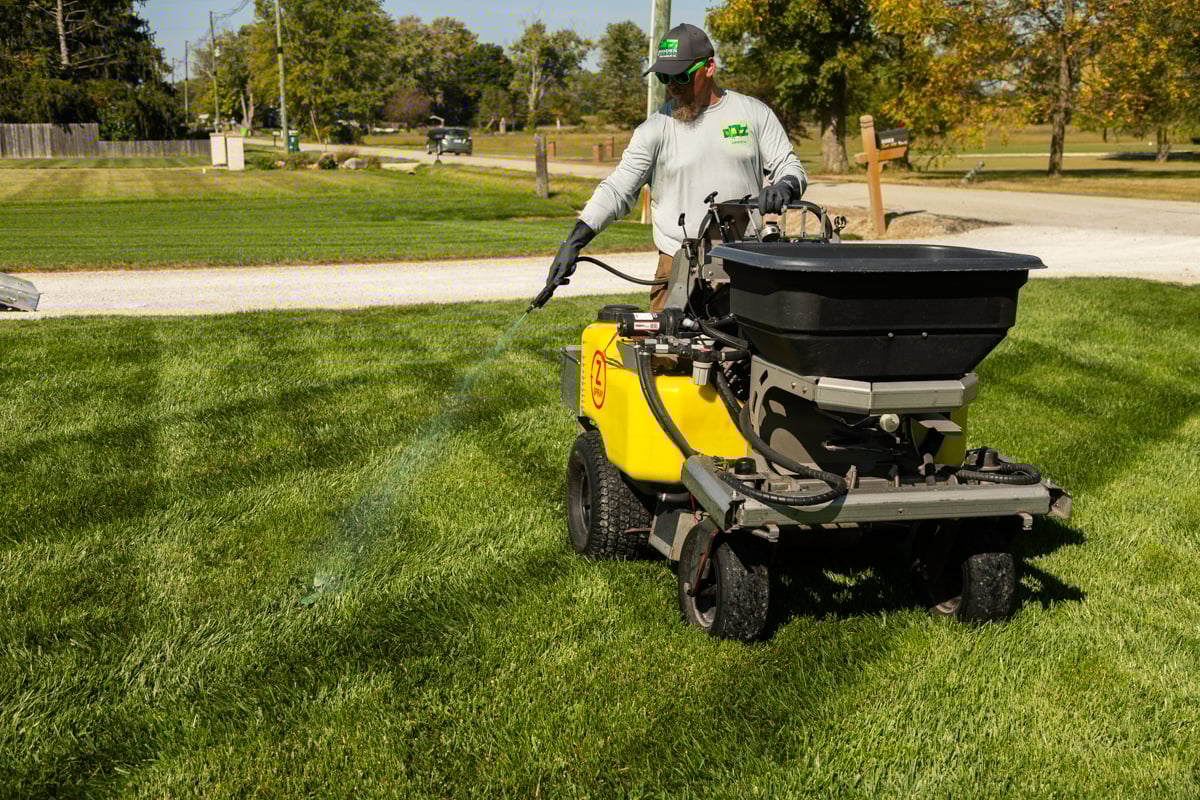
Spring pre-emergent applications are important as well to tackle those grassy weeds like crabgrass before they even break through the soil. Since our temperatures can rise and fall quickly and unevenly, precise timing is very important. At Shades of Green, we use both liquid and granular pre-emergents to ensure the most effective weed prevention.
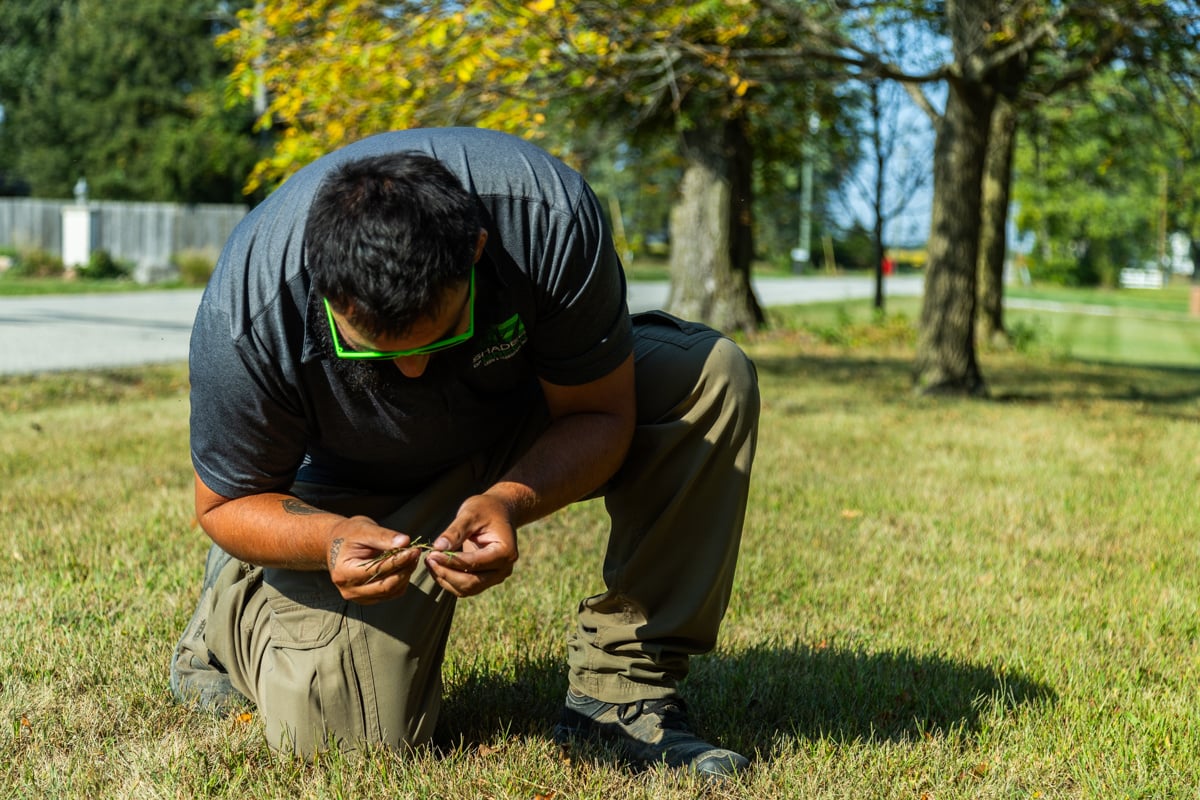
When applying post-emergent weed control, timing is still important, but observation plays more of a key role. Since the best time to apply them is as soon as weeds are visible, it is important to have a lawn care team that is regularly at your home.
For Indiana lawns, post-emergent application usually starts in late May or early June, depending on how warm our spring has been. For many weeds, even crabgrass, there is a limited window during which these products are most effective. If treatments are delayed too long, it can result in products not working as well or weeds having too much time to spread and establish themselves.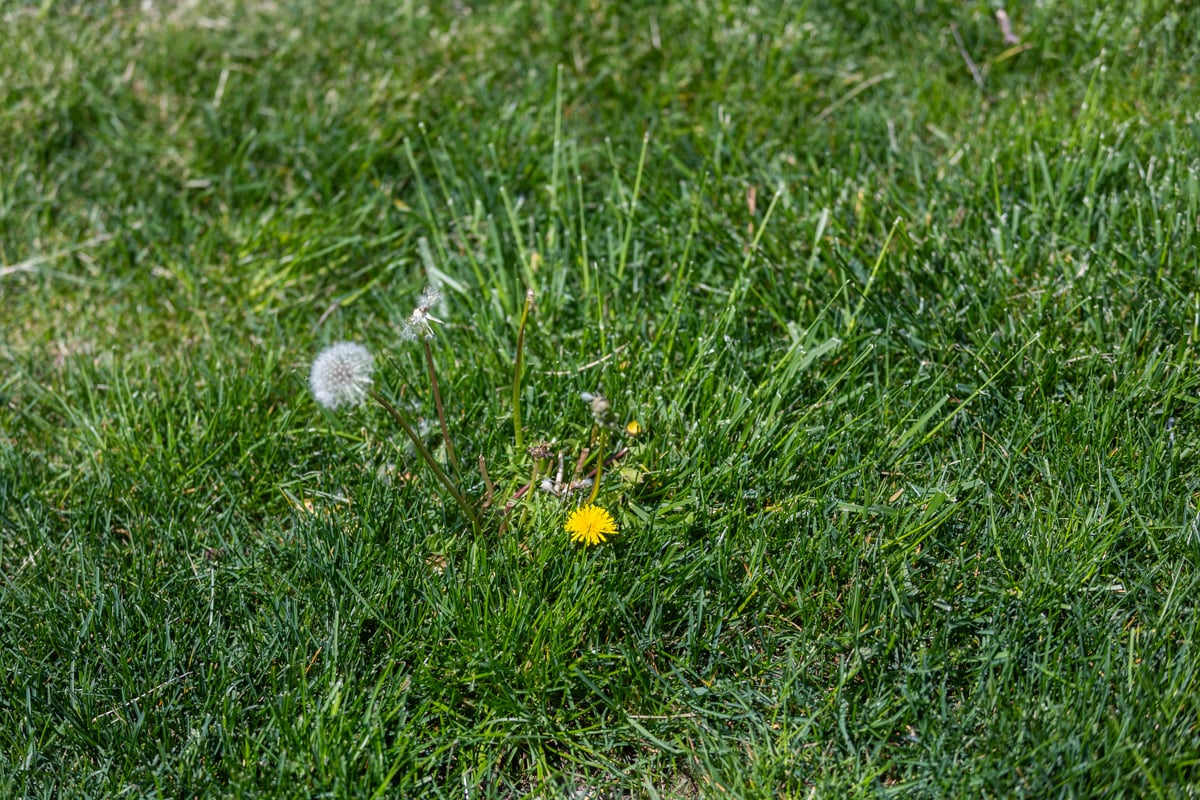
The tricky part with weed control in Indiana is that there is no single “right date” every year to apply pre-emergent or post-emergent. Weather patterns shift every year, which means some springs warm up fast and others stay cold well into April. Rain, wind, and soil temperatures all affect when weeds germinate and how treatments perform.
This is why weed control can be so difficult on your own. Having a local lawn care professional who understands our crazy weather and can adjust on the fly is critical. Even more important is having multiple visits throughout the season, so weeds can be caught as they appear, not after they have had plenty of time to make your backyard their home. Prevention is always easier, more effective, and more affordable than trying to fix an out-of-control weed problem.
Instead of relying on a one-size-fits-all schedule, we use a season-long adaptive approach to weed control that adjusts as conditions change.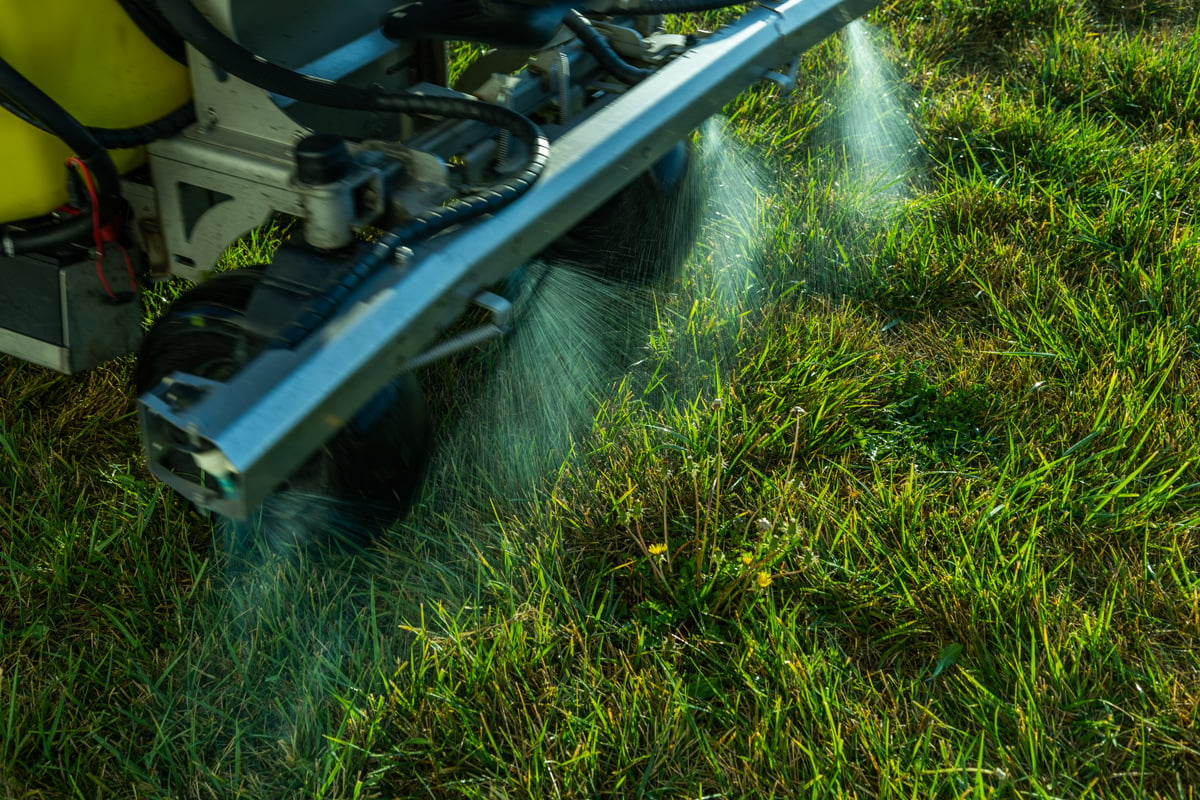
Pre-emergent is applied during one of these applications, but we adjust as the weather shifts. Occasionally with heavy wind and rain, we may shift between a liquid fertilizer to a granular application if needed. There is already a pre-emergent application down from the fall, which is targeting crabgrass and foxtail, but depending on the weather, we may apply broadleaf weed control post-emergents. For example, April 1st is sometimes full of beautiful green lawns and other times still pretty chilly with lawns not fully woken up yet. Depending on the weather, we use a different chemistry to kill and battle weeds. Weather permitting, we sometimes will use a post-emergent weed control in application two to target dandelion, clover, and thistle.
During this time, we usually start to see yellow nutsedge and begin tracking it or searching for it. Spot treatment of post-emergent weed control is our main focus to keep weeds under control.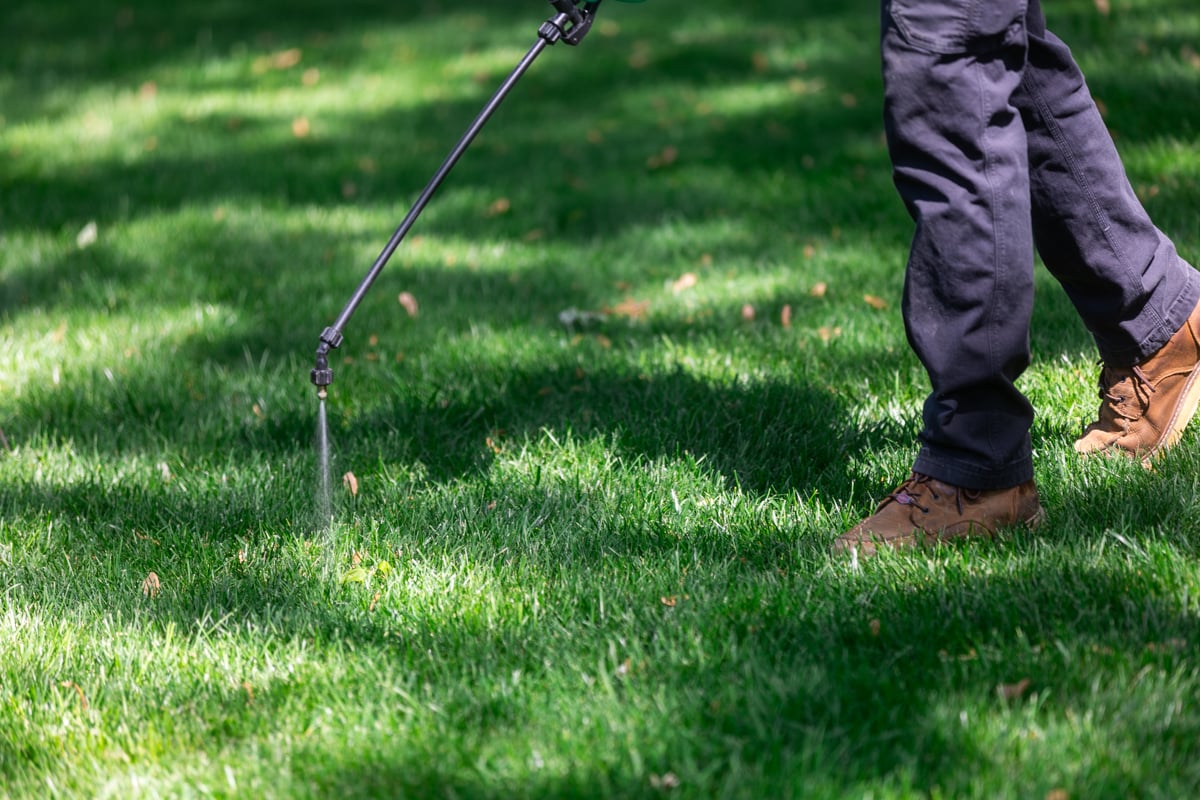
As the season slows, we shift from aggressive weed control to long-term prevention and lawn health. Application five is usually a slow-release fertilizer to support steady, healthy growth through the late summer and into October. Post-emergent weed control is only used when needed as a spot treatment. By the time application six has rolled around, weed growth has slowed significantly, and treatments for crabgrass and yellow nutsedge are typically no longer effective. At this time, liquid pre-emergent is a great tool to help reduce future weed pressure.
The final application is one of the most important of the whole year. A strong fall pre-emergent is applied to help battle weeds before they germinate the following spring.
Understanding the difference between pre-emergent and post-emergent weed control is the first step toward a healthier lawn, but knowing when and how to use them is where things get challenging. Unfortunately, what worked last year may not work this year due to shifting conditions.
Trying to manage weed control on your own oftentimes means guessing at timing, reacting too early or too late, or applying products that don’t match the current conditions. Without a lot of research and consistent monitoring, weeds can move from a small issue to a widespread problem in just a few weeks.
This is where partnering with a professional can make a big difference. At Shades of Green, our season-long approach allows weeds to be caught early, future outbreaks to be prevented, and your lawn to be kept healthy all season long.
Ready to kick weeds to the curb for good? Get started by filling out our contact form.
Envision a Brighter Future for Your Lawn


Cory is the heart and soul of Shades of Green. His dedication to doing right for our customers has been the driving force behind the company's success. With a degree in Turf Science from Purdue University, Cory continually strives to craft the best treatment plans using the latest technologies and innovative products, ensuring top-notch results for every client.