
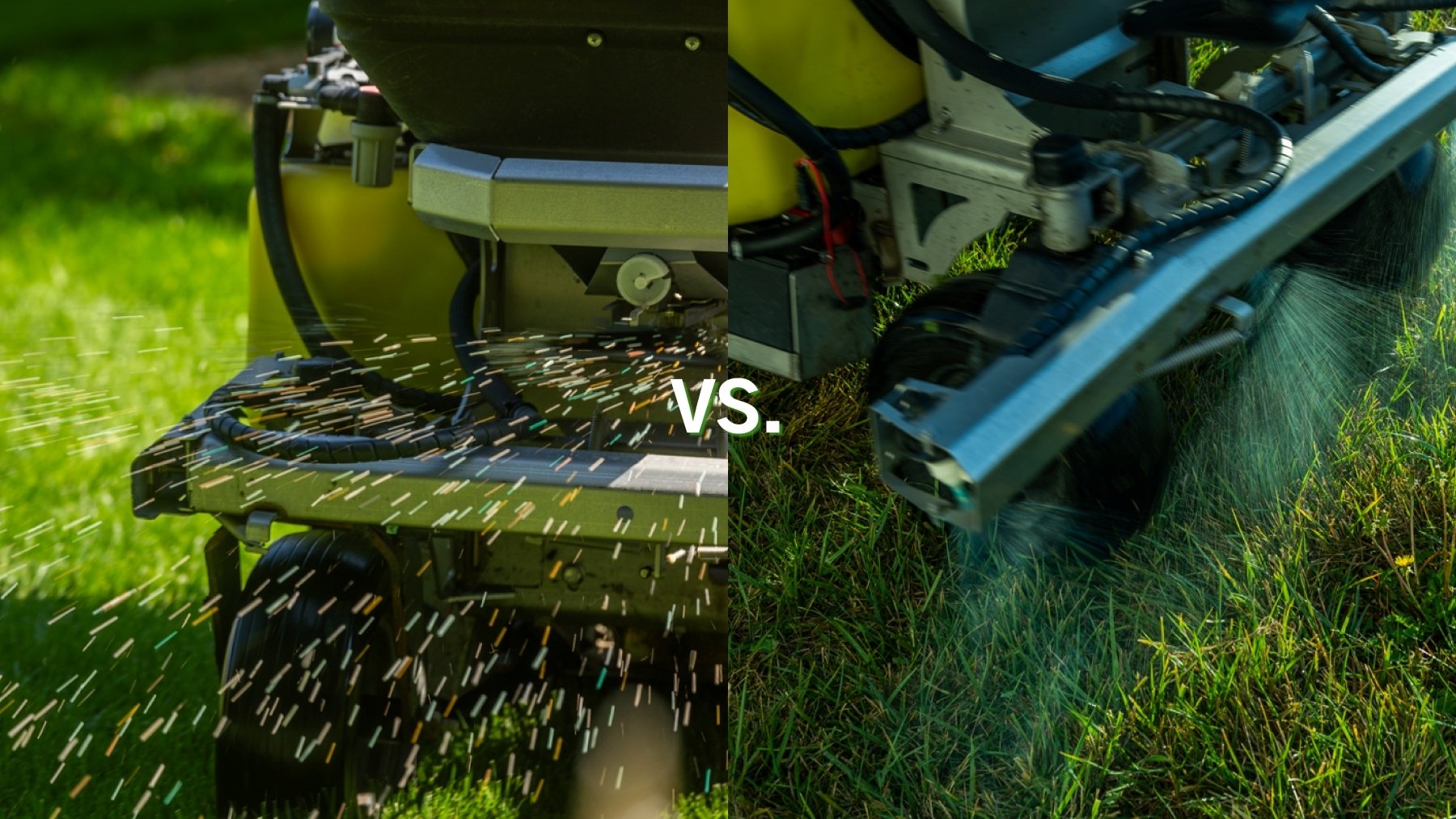
Liquid vs. Granular Fertilizer: When to Use Each for Your Indiana Lawn

Ever stood in the fertilizer aisle staring at bags and bottles with no idea what to select? Choosing between liquid and granular fertilizer is one of the most common and confusing lawn care decisions that homeowners face. And with our unpredictable Indiana weather, it can feel even more overwhelming trying to get it right.
Here is the quick answer: use liquid when temperatures are cooler or when you are already spraying weed control, and use granular in the heat of summer or when your lawn needs more nitrogen without the risk of burn. Simple enough, right? That is, until you factor in timing, weather changes, product types, and your specific lawn.
Let’s break down the differences between liquid and granular lawn fertilizer, the pros and cons of each, and how Indiana’s climate should impact your choice.
Jump To:
Liquid Fertilizer vs. Granular
When Granular Fertilizer is Best
When to Use Liquid Fertilizer
Is Liquid Fertilizer Better Than Granular?
Partnering with a Lawn Care Professional
Liquid Fertilizer vs. Granular: What’s the Difference?
Lawn care shouldn’t feel like choosing a college major, so let’s make this easy.
Liquid lawn fertilizer is exactly what it sounds like. Nutrients are dissolved in water and sprayed directly onto your grass. Think of it like giving your lawn a refreshing energy drink. It absorbs fast, works quickly, and is great for giving your turf a pick-me-up and controlling weeds.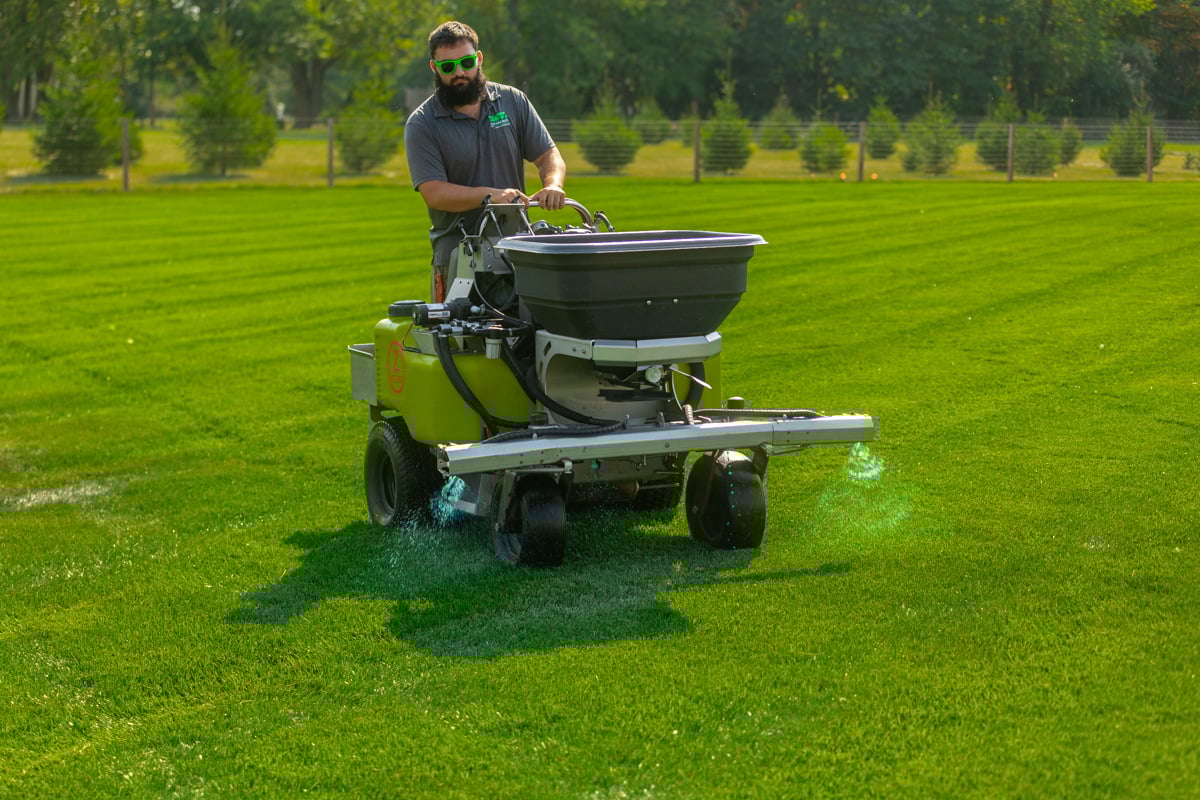
Granular lawn fertilizer comes in solid pellets that you spread across your lawn. They are usually coated, so they break down slowly over time, like a slow-release multi-vitamin. They keep feeding your lawn steadily, which helps maintain long-term color, health, and growth.
Both fertilizers come in a variety of different options, and both deliver nutrients, just in different ways. Let’s get into which is better for your lawn and when.
When Granular Fertilizer is Best
Granular lawn fertilizer tends to be the star of the show in the middle of the summer. That’s because these polymer-coated granules are incredibly stable in warm, consistent weather. Once they are on the lawn, they release nitrogen slowly and predictably. This makes granular one of the most reliable options for long-term feeding when temperatures are hot and stable.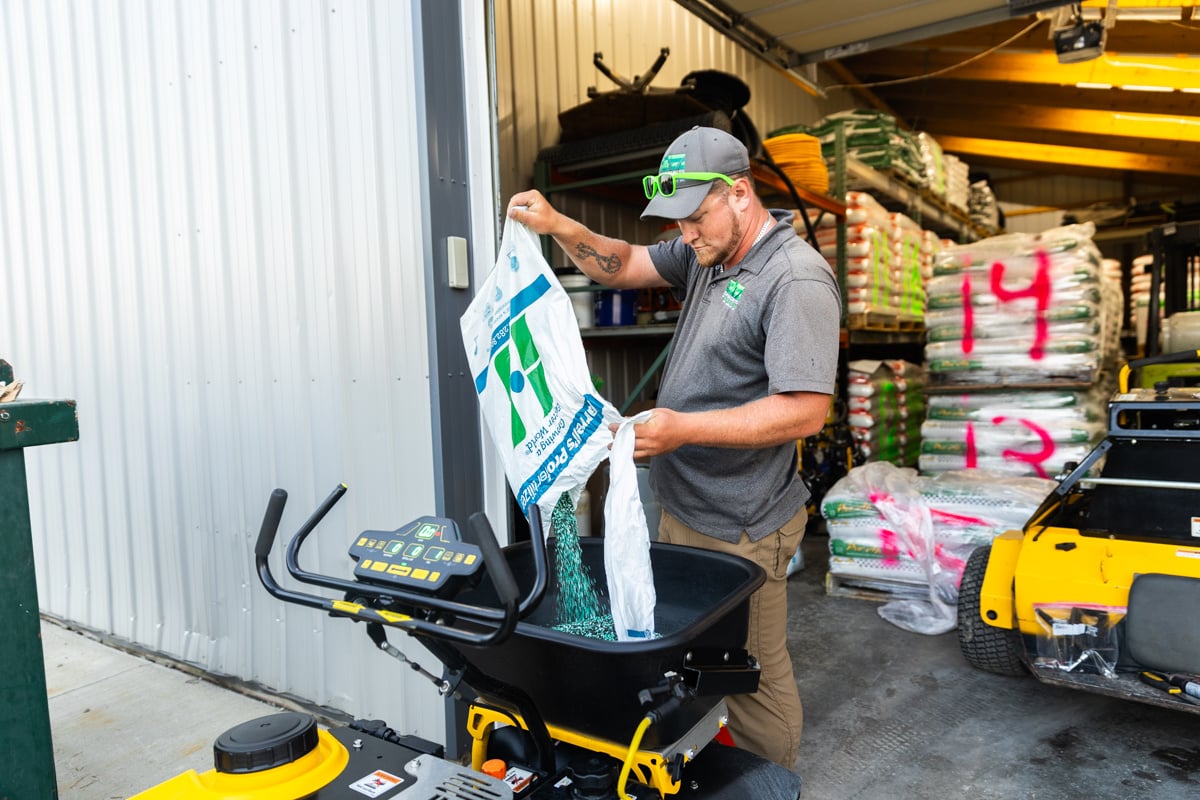
Another perk? Granular products can be formulated to stay effective for months. We order by semi-load a custom-blended mix for the season ahead. Many granular slow-release fertilizers depend on heat or moisture to activate, so in cooler temperatures, they simply don’t break down as quickly as you may want them to.
When it comes to delivering nitrogen, granular fertilizer has a big advantage. You can apply more at once without stressing or drying out the lawn. Because granular products are stabilized and slow-release by design, they meter out nitrogen gradually instead of hitting the turf with one big blast. That slow and steady release keeps the grass fed without overwhelming it.
This makes granular the go-to choice when your lawn needs a deeper nitrogen boost. You get the benefit of applying a larger amount in a single visit, while the coating on the granules controls how quickly the nitrogen becomes available. This results in healthier growth, better color, and far less risk of burning or drying out the turf.
When to Use Liquid Fertilizer for Grass
Liquid fertilizer definitely has its place on the lawn, especially when you want flexibility and great results with weed control. You can make liquid products stabilized so they release more slowly, but they still need to be applied with care. When too much liquid fertilizer is sprayed on the blades at once, it can cause the tips to burn or even dry out the grass.

So if granular lets you load up on nitrogen, liquid is all about precision. It’s perfect for situations where the lawn needs a more controlled feeding. And one big perk? Liquid applications pair beautifully with weed control. When herbicides are mixed into a liquid fertilizer, grass, including weeds, take in the treatment like food. While your lawn benefits from the nutrients, weeds suffer from the effectiveness of the weed control in the cocktail.
The real magic of liquid fertilizer is how easily it can be adjusted on the fly. If the lawn is under stress, you can hold back on nitrogen to avoid pushing growth. Then, as soon as rainfall hits and the turf can handle more feeding, you can dial up the nutrients your lawn needs. That level of control makes liquid an incredibly useful tool for responding to real-time lawn conditions.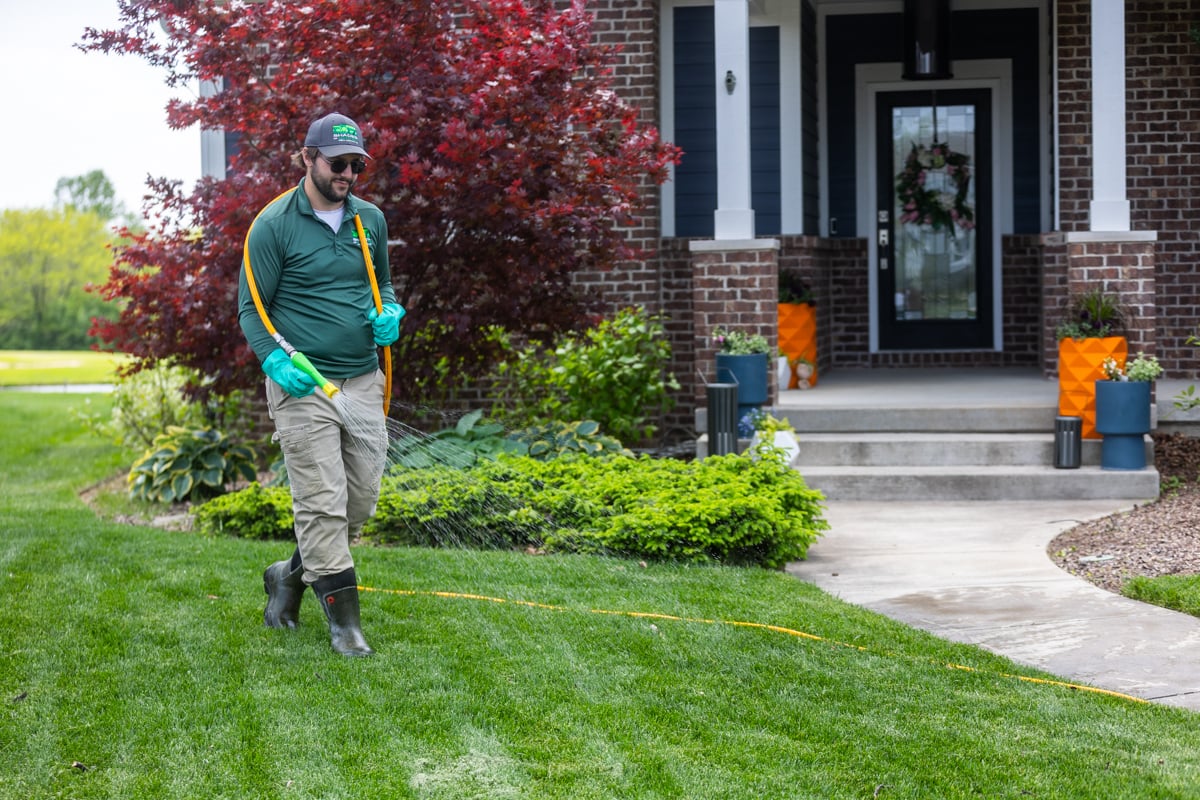
Is Liquid Fertilizer Better Than Granular? The Pros and Cons of Each
When it comes to choosing granular or liquid fertilizer, homeowners often hope there is a clear winner or a single best option that works in every situation. But the truth is, it is a little more like comparing wrenches and screwdrivers. Both have a job and are useful. And both can make things a mess if used at the wrong time. It really is about knowing when each type of fertilization shines.
Liquid fertilizer really shines in the spring and fall, when cooler temperatures help the grass absorb nutrients through the blades without stressing it out. And if you are already spraying herbicide, it just makes sense to blanket the lawn with liquid fertilizer at the same time. Liquid fertilizer and weed control work hand in hand, and the weeds take in the herbicide more effectively when nutrients are also delivered through the spray.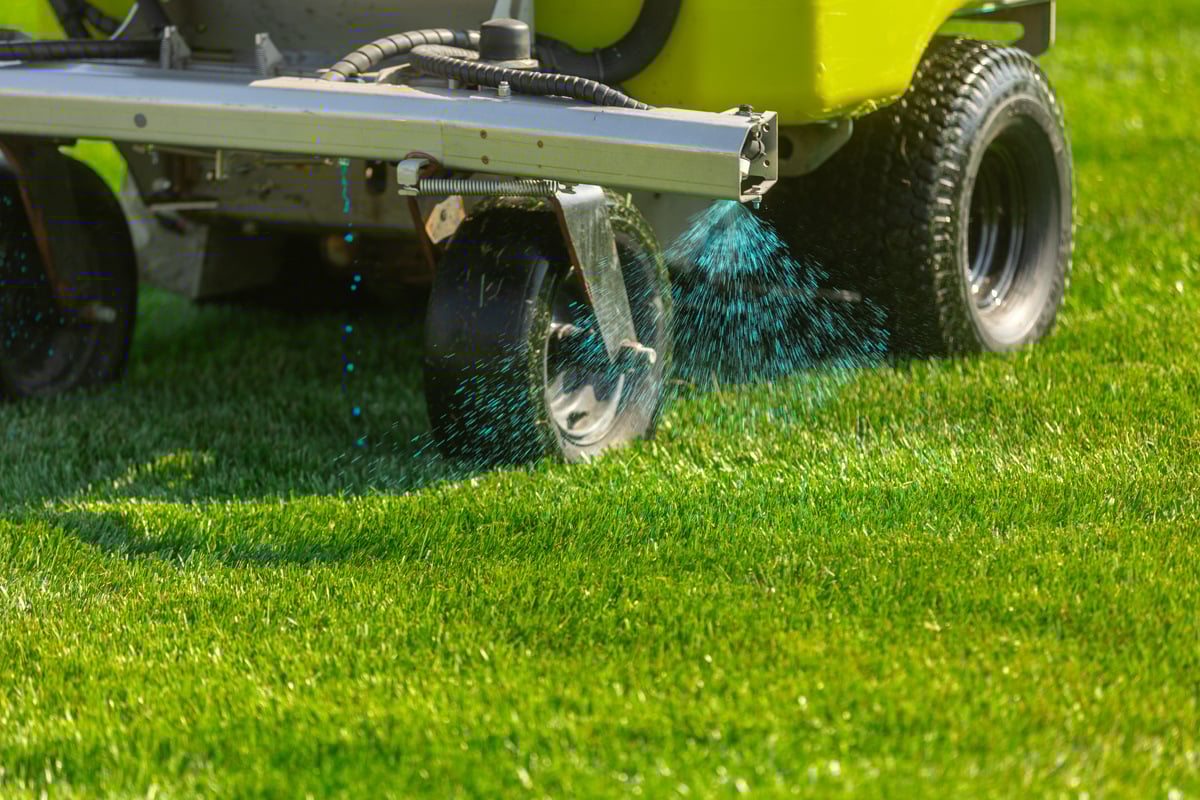
Using liquid during the hottest months can be risky because of how much nitrogen Indiana lawns need. There are liquid products that are safe in summer, but they are extremely expensive, and applying heavier nitrogen can still dry out the grass through a spray if not done carefully.
Indiana’s climate doesn’t make things easy. With big temperature swings, unpredictable rainfall, and humid summers, no single fertilizer type can do it all. That’s why timing is everything. Applying the wrong product at the wrong time is one of the fastest ways to waste fertilizer or accidentally damage the lawn. That’s why partnering with a pro can help. Professionals understand how temperature, moisture, and growth cycles affect how fertilizers release, so your lawn gets exactly what it needs when it needs it.
At Shades of Green, we use both liquid and granular applications in our lawn care programs, but not at the same time. Some clients ask for only granular or only liquid, but each one has strengths that make it the right choice for certain rounds. We also avoid mixing both approaches in one visit because carrying dry and liquid materials together can lead to contamination, and once that happens, the products are ruined.
The real key is not picking spray fertilizer vs. granular forever, but understanding the situations in which each performs best.
Partnering with Shades of Green for Lawn Care Services in Lafayette, Carmel, Noblesville, Westfield, Zionsville, and Nearby Areas
At the end of the day, liquid and granular lawn fertilizers are not opponents, but teammates. Each one has moments where it performs beautifully and moments when it is just not the right fit. The real challenge is knowing when to use which product, how much to apply, and how the changing Indiana weather will impact the results.
At Shades of Green, our lawn programs are built around the season, the soil, and the specific needs of Indiana turf by choosing the type of fertilizer that will work best for your lawn. It takes the guesswork out of lawn care and keeps your grass healthier, greener, and better protected all year.
Need a partner who understands the timing, science, and quirks of Indiana’s climate? Get started by filling out our contact form.

About Cory Overman

Cory is the heart and soul of Shades of Green. His dedication to doing right for our customers has been the driving force behind the company's success. With a degree in Turf Science from Purdue University, Cory continually strives to craft the best treatment plans using the latest technologies and innovative products, ensuring top-notch results for every client.