5 Common Lawn Weeds in Indiana: How to Identify and Prevent

~5 mins
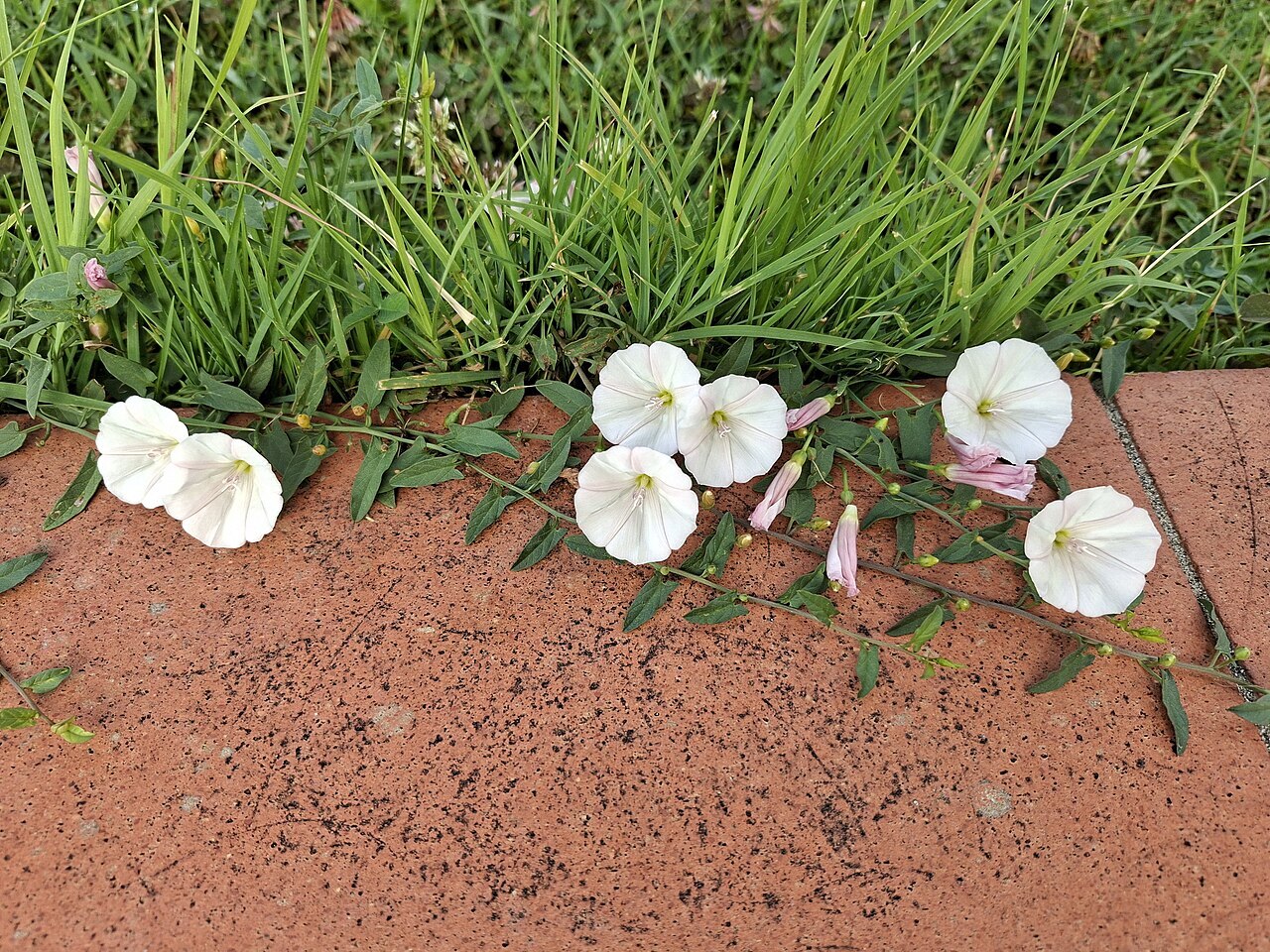
Have you spotted delicate white and pink blooms winding their way through your grass? They look harmless, and honestly, even a little pretty, right? Unfortunately, those cute trumpet-shaped flowers are attached to vines that are spreading fast both above and below ground, and bindweed has officially moved in.
When bindweed takes hold of your turf in Indiana, it sadly does not back down easily. The best way to prevent and eliminate bindweed is not just spraying what you see, like with other weeds. It’s building a thick, healthy lawn that leaves no room for it to grow in the first place. Strong turf, proper fertilization, aeration, and targeted weed control all work together to stop bindweed in its tracks and keep it from coming back.
Let’s break down:
What is Bindweed?
What are the Most Common Types of Bindweed?
Why is Bindweed Control So Difficult?
How to Get Rid of Bindweed
Partnering with Shades of Green for Lawn Care
Bindweed is a perennial broadleaf weed, which means it does not just show up for a season and die off; it comes back year after year, and tends to spread aggressively.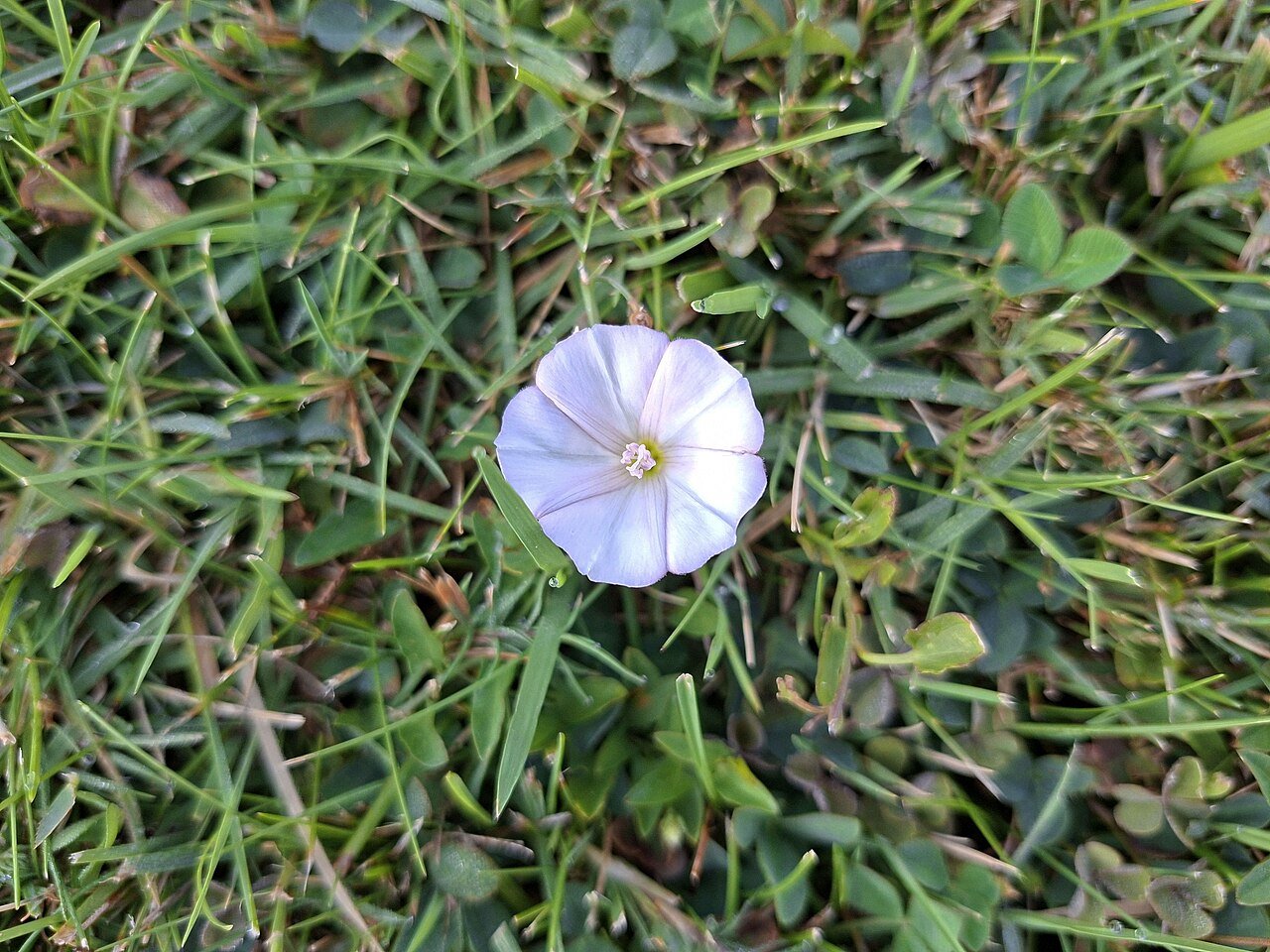
What makes this weed especially pesky is that it grows both above ground and below ground. Above ground, it sends out long vines that wrap around grass, plants, fences, and anything else in their path. Below ground, it spreads through a very extensive root system, which we call rhizomes, that can travel far beyond where you can see it popping up in your turf.
Bindweed thrives in dry soils and thin, stressed turf, which makes lawns with bare spots or compacted areas especially vulnerable. Once it finds an opening, it moves in fast and doesn’t give up very easily.
Bindweed has a few features that make it easier to identify if you know what you are looking for. Watch for:
Arrowhead-shaped leaves that taper to a point
Slender, creeping, or climbing vines
White to pale pink, trumpet-shaped flowers
At first glance, the flowers can look almost pretty, but these blooms are attached to a plant that quickly chokes out turf.
Several varieties of bindweed can pop up here in Indiana. While they all share the vining, spreading habit, they do have a few key differences. Here are the most common types you may find in your yard.
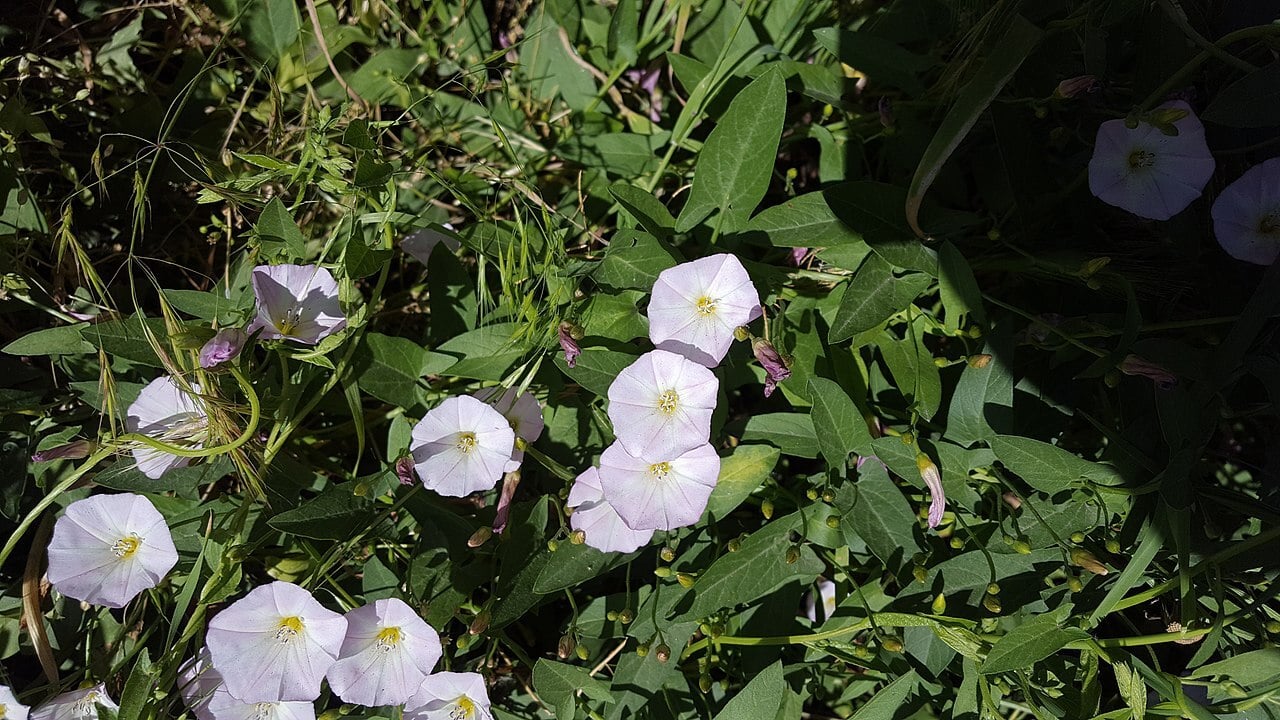
This is the most common type of bindweed and what you will most likely run into in your lawn. It is low-growing and sneaky. It forms dense mats with its vines and has the traditional look we described above. The trickiest part of this variety is the fact that it grows underground as well. Its deep root system can allow it to survive mowing, drought, and most DIY treatments.
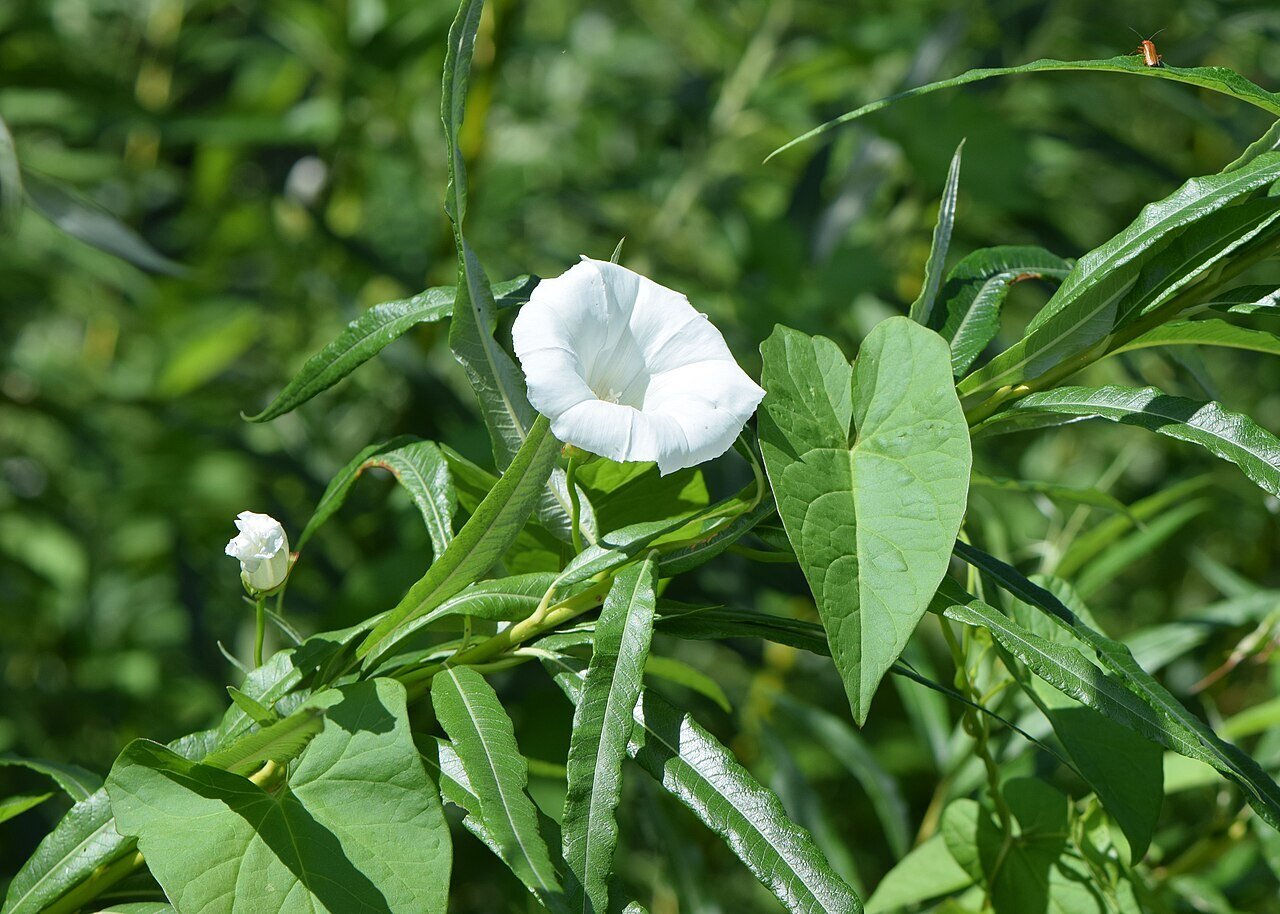
This type of bindweed tends to climb, instead of staying low to the ground like field bindweed. Hedge bindweed is the culprit that climbs fences, shrubs, garden plants, and even small trees. The leaves are usually a little larger than field bindweed, and the flowers are a bit more showy, too. While the main concern for this type of bindweed is landscape beds, it can still creep into lawns.
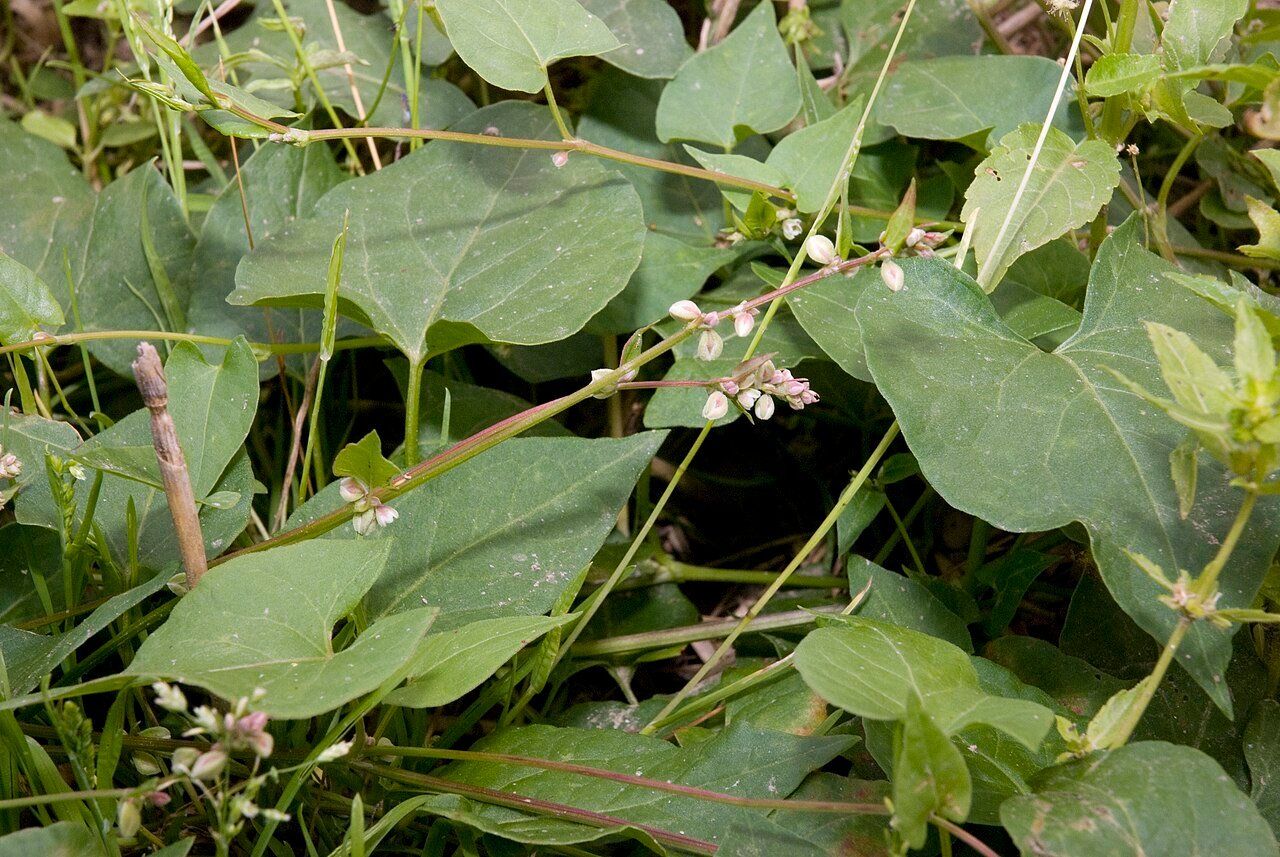
This type of bindweed looks a bit different than the other two. It often is an annual vine and can be found in garden beds or at the edge of your turf. The leaves are more heart-shaped, and the flowers are greener and smaller. It can still sprawl and tangle through turf and ornamental plants, but it is much less common here in Indiana.
Bindweed is quite difficult to eliminate because of its root system, seeds, and how quickly it spreads. Its root system can extend several feet deep and spread outward far beyond what you see on the surface. Even tiny fragments of root left behind in the soil can mean that an entirely new plant can grow back. This is why, if you have tried pulling it by hand, it often snaps at the surface and comes right back in a few days as if nothing happened.
Bindweed also produces seeds that can remain viable in soil for years. If you have not properly cleared it out, dormant seeds can germinate later when conditions are right. Dry weather, thin turf, or disturbed soil can all trigger new growth. Because it spreads both below and above ground, it spreads very quickly. By the time you notice it in one area, it may already be established somewhere else.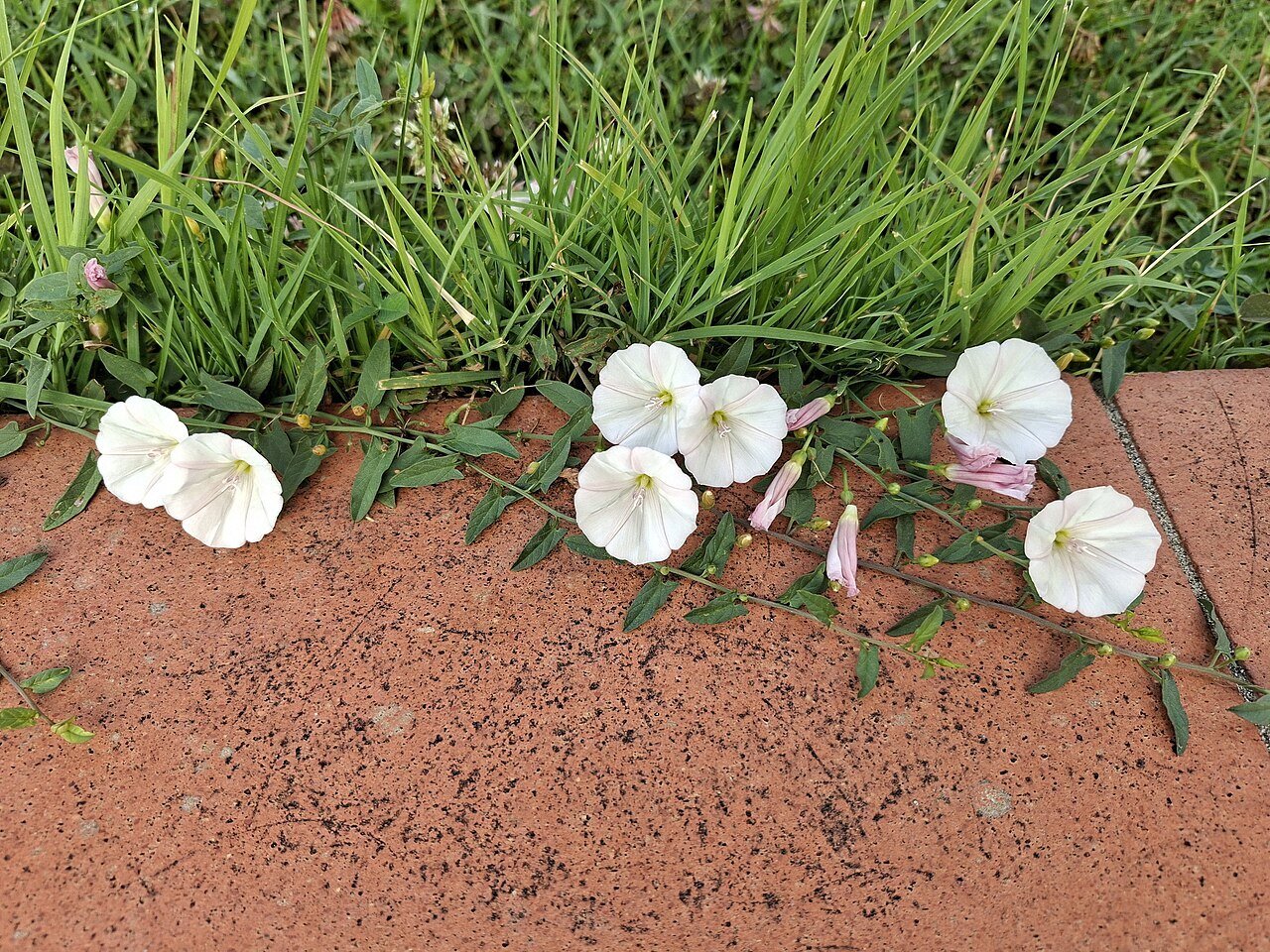
Most over-the-counter weed sprays are designed for simpler annual broadleaf weeds. They might burn the top growth of bindweed, making it appear like it is working, but it will fail to reach the deep root system below the surface.
The key to long-term bindweed control isn’t just killing what you can see. Combining targeted weed control with a lawn health program makes your yard less inviting to begin with and controls bindweed for good.
Bindweed is stubborn because of its deep root system and long-lasting seeds, which means a one-time spray is not usually enough. At Shades of Green, we tackle weeds with a strategic combination of targeted pre-emergent treatments to help reduce future germination and post-emergent applications that actively target existing bindweed plants. This dual approach helps to kill what is actively growing and what is waiting below the surface.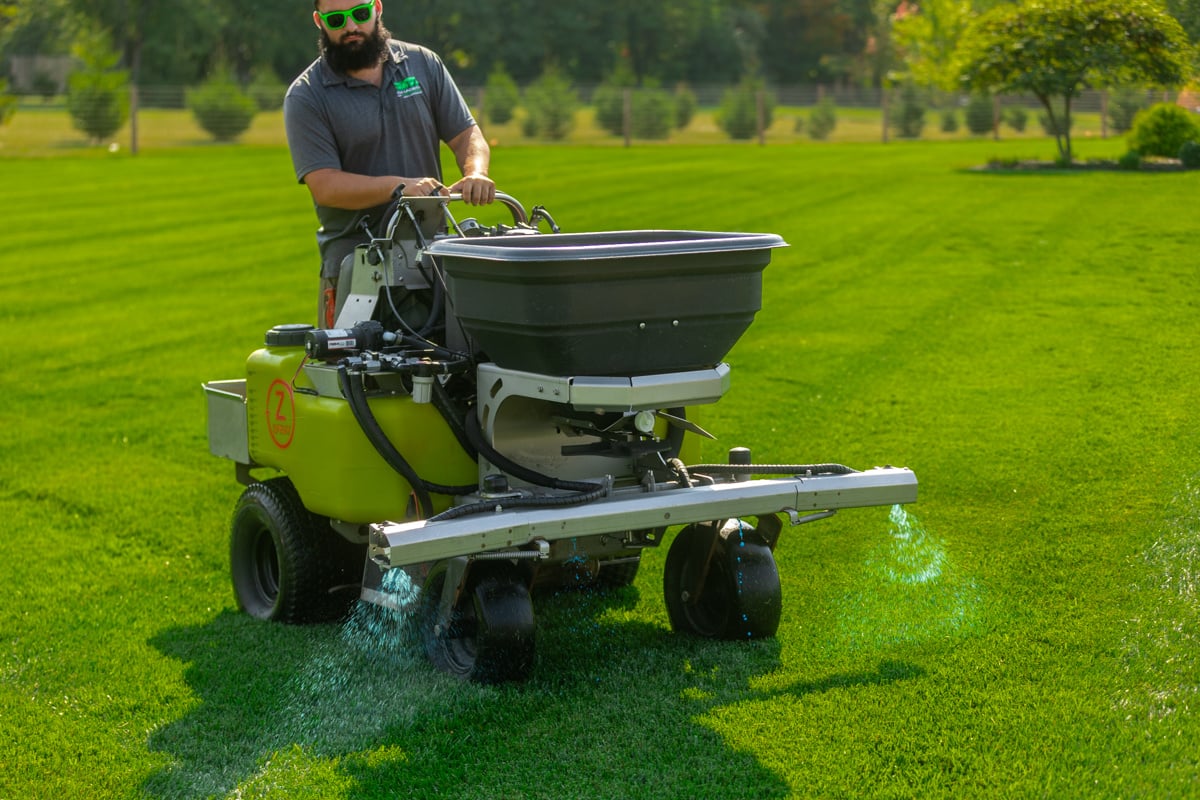
Timing here matters. Most broadleaf herbicides are especially effective when applied in the fall. Bindweed, and many weeds, are actively transporting nutrients down into their root systems to prepare for winter. This downward movement means treatments get pulled deeper into the plant, too.
For weeds like bindweed that love weak turf, a healthy lawn is your best defense. Long-term prevention requires a comprehensive lawn health program that includes proper fertilization, liquid and core aeration methods, and ongoing monitoring to catch issues early. When your grass is dense and healthy, it naturally crowds out weeds like bindweed and makes reinfestation much less likely.
Battling weeds like bindweed can make lawn care incredibly frustrating. When vines keep creeping back, and DIY sprays don’t seem to make a dent, it is easy to want to just give up. But with the right strategy, like targeted treatments, proper timing, and a lawn health program that strengthens your turf, long-term control is possible.
If bindweed or other pesky weeds like crabgrass are taking over your Indiana lawn, you don’t have to tackle it alone. At Shades of Green, our team understands the unique challenges our lawns face and knows how to build a plan that consistently delivers results.
Ready to stop battling weeds and get back to enjoying your yard? Get started by filling out our contact form today.
Image Sources: bindweed flower, field bindweed, hedge bindweed, black bindweed, bindweed on sidewalk
Envision a Brighter Future for Your Lawn


Cory is the heart and soul of Shades of Green. His dedication to doing right for our customers has been the driving force behind the company's success. With a degree in Turf Science from Purdue University, Cory continually strives to craft the best treatment plans using the latest technologies and innovative products, ensuring top-notch results for every client.