The 3 Most Common Lawn Diseases in Indiana and How to Treat Them

~4 mins
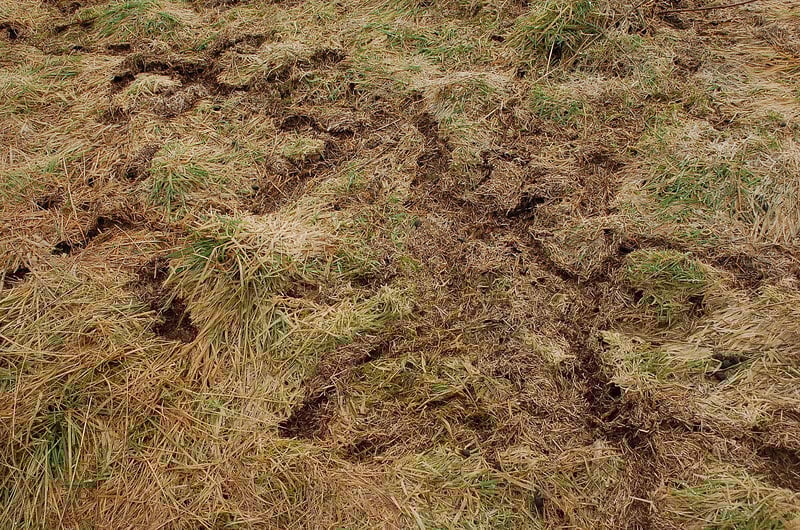
Ever step outside and notice strange little paths winding through your lawn, almost like someone built a tiny adventure course overnight? No mud, no big holes, just narrow runways zig-zagging through the grass. It’s enough to make you wonder who’s been having a great time treating your yard like their personal playground.
Chances are, this means you are dealing with voles.
If you are wondering how to get rid of voles in your lawn, the answer starts with understanding what you are up against. Voles are small and sneaky, and very efficient at causing lawn damage; however, most healthy lawns can bounce back on their own.
Let’s break down exactly what voles are, how they differ from moles, why they show up in your lawn in the first place, what damage looks like, and how to protect your yard moving forward.
We’ll cover:
What is a Garden Vole?
Voles vs. Moles
Why Do I Have Voles in My Yard?
What Does Vole Damage Look Like?
Tips for Vole Removal and Treatment
Vole Prevention in Indiana
Partnering Shades of Green for Lawn Care
Before tackling a vole problem in your lawn, it is helpful to understand exactly what they are. A vole is a small rodent that looks a bit like a mouse, but has its own distinct features and habits. They are quite common throughout Indiana and the Midwest in general. Garden voles tend to live outdoors in grassy areas, fields, and of course, residential lawns.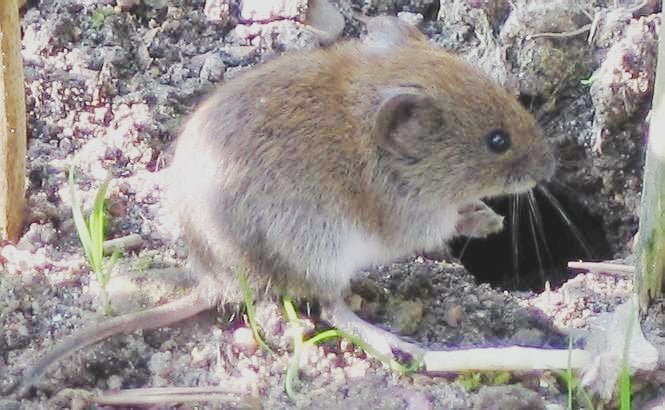
So what does a vole look like? Voles are usually around 4-8 inches long with compact, stocky bodies. They have very short legs, small ears that sit close to their heads, and a tail that is shorter than a mouse’s. Their fur is usually brown or gray, and their faces are round rather than pointy.
Because they are so small and tend to stay low to the ground, voles often go unnoticed unless you know what to look for. You might have never even seen one before.
Voles and moles often get blamed for the same lawn problems, but they are quite different creatures with different motivations, so knowing which pest you are dealing with is key.
Moles are insect-eaters, not plant-eaters. They are attracted to healthy soil that is full of earthworms and other insects. If your lawn has rich, well-aerated soil, it can be even more appealing to moles.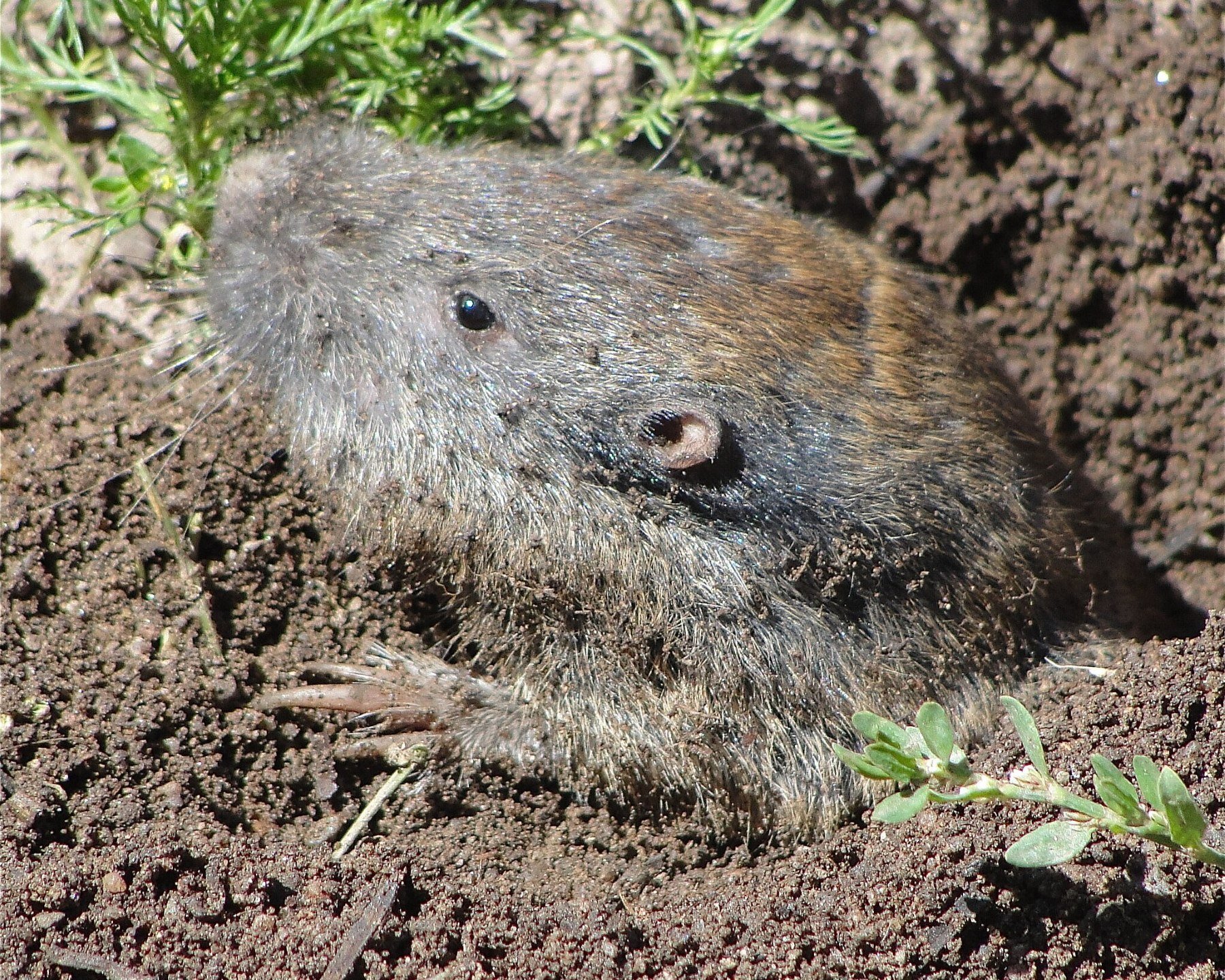
Voles are rodents that live above the ground, not beneath it like moles. They prefer cover and shelter. If your property backs up to a woodline, field, or overgrown area, you are more likely to see voles wandering into your lawn. They are not usually after healthy soil, but a safe place to move and eat.
If you are noticing voles in your yard, it doesn’t just mean you have bad luck. Voles are drawn to areas that offer cover, food, and protection. Thick grass, ground cover, mulched beds, and unmowed edges give them places to hide while they move around.
Seasonal changes play a big role, too. As temperatures drop or food sources shift, voles will migrate into lawns that provide consistent shelter. Snow cover in winter can even act like a protective blanket, allowing voles to stay active without being seen.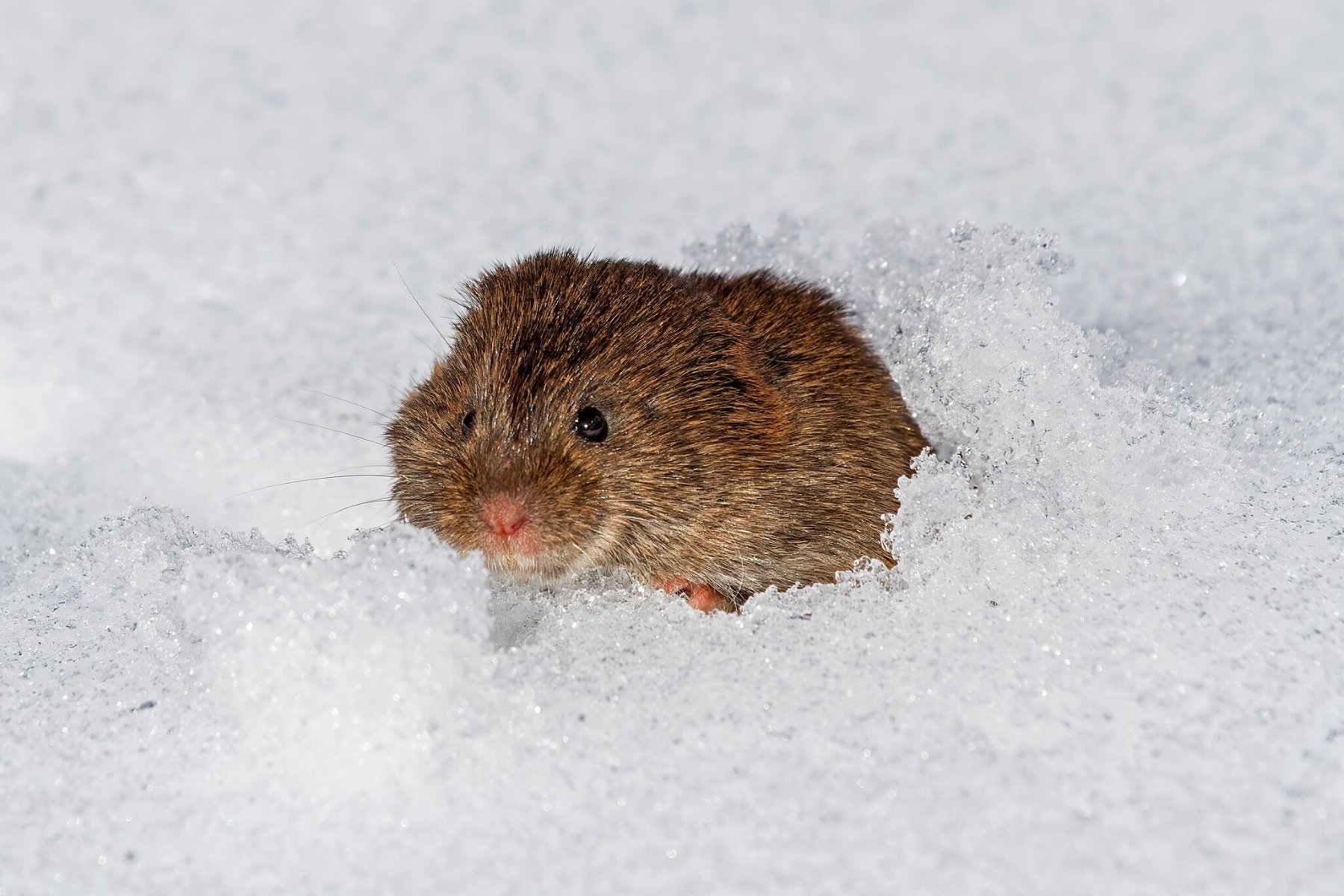
Voles in a lawn don’t mean your yard is unhealthy. In many cases, it simply means your landscape offers the kind of environment voles prefer.
One of the most frustrating things about voles is that you often don’t even see the animal, but you see the aftermath. Vole damage is pretty easy to spot, unlike certain lawn diseases, so it is easy to deal with once you know what you are looking for.
The most common sign of voles in the yard is narrow, winding paths in the grass. They almost look like runways, and they sit at the surface of the soil and look like flattened or worn-down trails. They can appear quite suddenly, especially in early spring.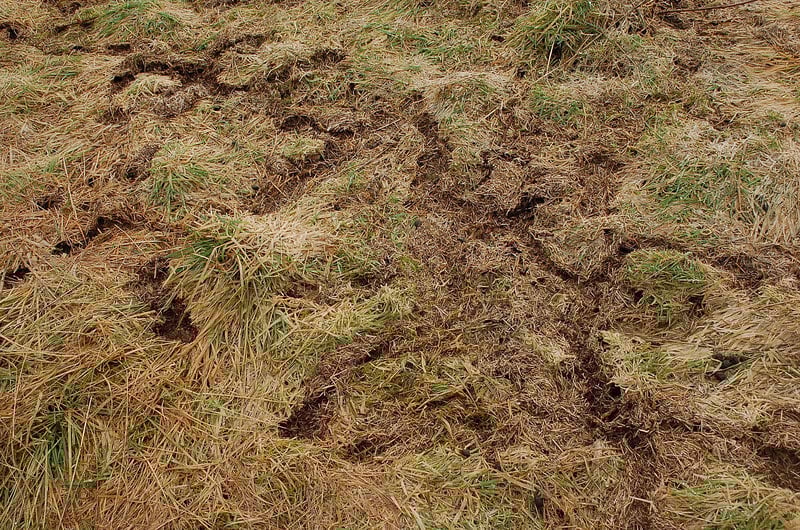
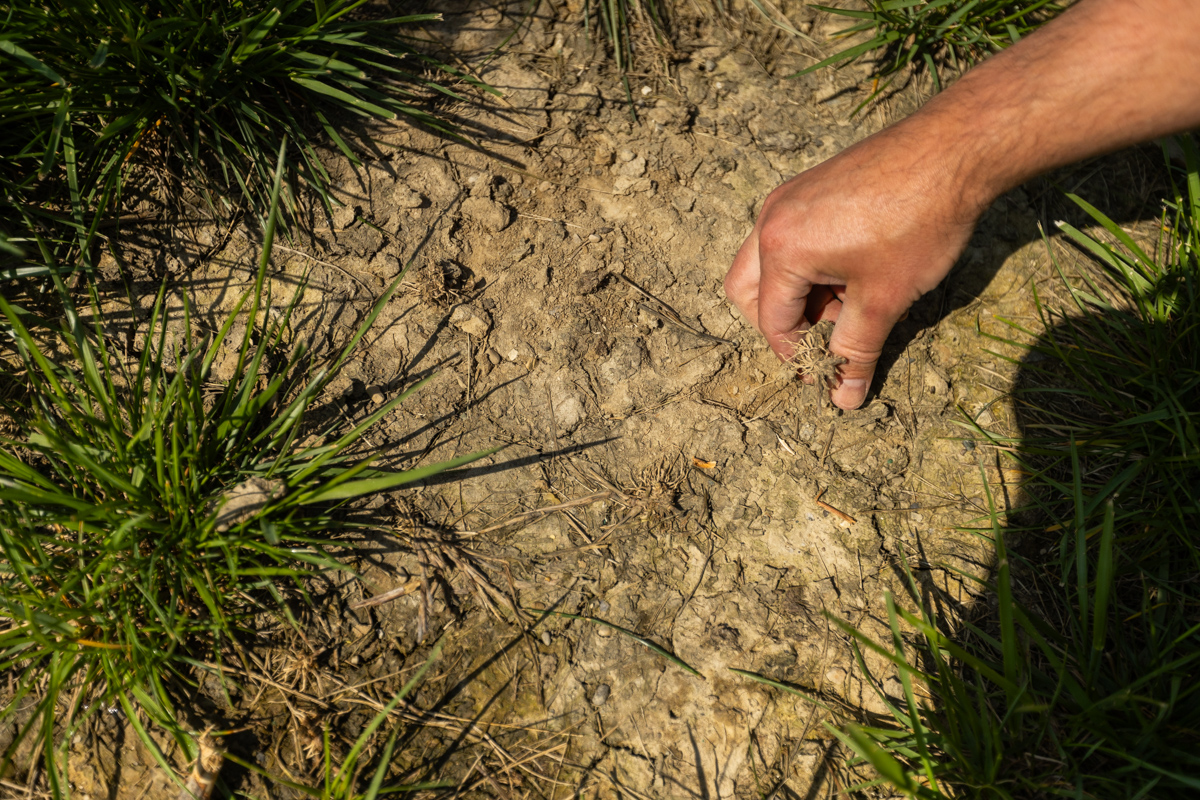
You may also notice small openings in the lawn where voles enter and exit their pathways. These holes are about the size of a quarter and don’t have mounds of soil around them. In landscaped areas, vole damage can show up as chewed grass, damaged plant bases, or gnawed bark near the ground on younger trees and shrubs. The damage is usually low and close to the surface rather than deep underground.
When it comes to vole treatment, thankfully, most lawns are more resilient than you might expect. Even when vole activity is heavy, a healthy lawn can often recover on its own once the problem is under control.
The first step in vole removal is reducing the conditions that allow them to stick around. Clearing excess ground cover, keeping grass mowed to a proper height, and maintaining clean lawn edges make the area less inviting.
In more severe cases, vole activity can leave lawns looking thin or stressed. Fortunately, in our experience, most lawns will bounce back naturally, especially if they were healthy to begin with. With proper lawn care practices, like fertilization, mowing, and soil health management, grass will typically fill in without major intervention. Occasionally, light overseeding may be needed, but large-scale seeding usually is not necessary.
Preventing voles simply requires consistency. Regular mowing, trimming along fence lines and wood edges, and reducing dense ground cover all help limit hiding spots. Lawns near woodlines and natural areas benefit the most from routine maintenance that keeps those transition zones clear and open.
Healthy lawns are also better equipped to recover more quickly if voles do end up making their way into your backyard. Strong root systems and thick turf make damage less noticeable, too. While there is no way to fully prevent voles and no lawn is completely vole-proof, smart prevention strategies and ongoing care go a long way in keeping vole problems manageable.
Between voles, moles, lawn diseases, and occasional mystery problems that seem to pop up overnight, it is easy to feel unsure about what your lawn needs or what to do next. Many lawn issues look similar at first, but treating the wrong problem can mean wasted time, money, and effort.
That is where having a professional partner can make a huge difference. At Shades of Green, we are regularly on your lawn, getting to know it, and spotting early signs of trouble before they turn into bigger issues. Whether it is vole activity, mole tunneling, or disease stress, catching problems early helps keep your lawn healthier or more resilient year after year.
Ready for a hand with detecting lawn issues like voles, moles, and more? Get started by filling out our contact form!
Image Sources: vole, vole in a hole, vole in snow, vole lawn damage
Envision a Brighter Future for Your Lawn


Cory is the heart and soul of Shades of Green. His dedication to doing right for our customers has been the driving force behind the company's success. With a degree in Turf Science from Purdue University, Cory continually strives to craft the best treatment plans using the latest technologies and innovative products, ensuring top-notch results for every client.