
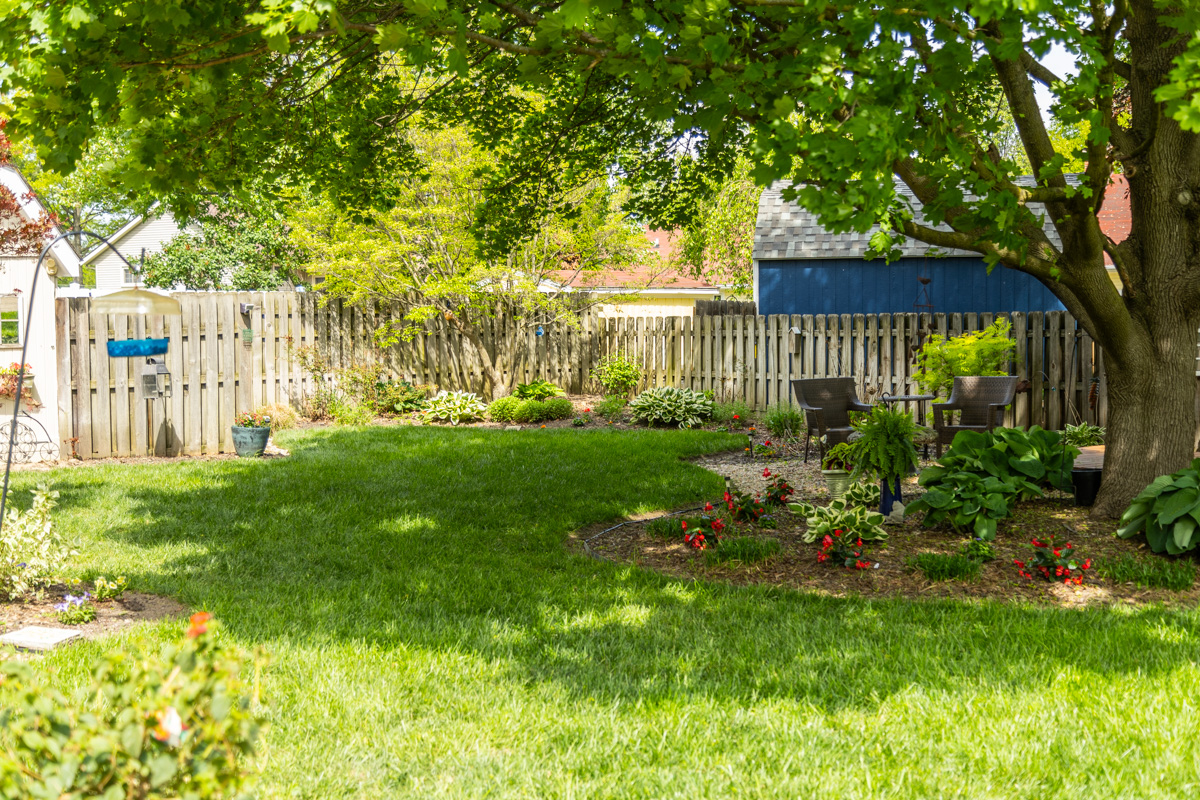
Growing Grass in Shady Areas: How Does Shade Affect the Health of Indiana Turf Grasses?
Trying to grow grass in shaded areas can be frustrating for homeowners. Grass commonly looks patchy and thin in these areas, despite your best efforts to take good care of it.
In this article, we’ll talk about the realities of grass shade tolerance. While we wish we could tell you there was a perfect answer for this problem, we believe it’s more important to set you up with realistic expectations. Even the best grass for shade may still not perform as well as you’d like. That might mean considering alternatives.
We’ll cover all of that in an effort to set you up for maximum success.
Jump To:
Does Grass Grow in the Shade?
How Much Sun Do Indiana Grasses Need?
The Connection Between Shade and Lawn Problems
Best Grass Types for Shady Areas in Indiana
When is Grass Not the Best Option?
FAQs About Growing Grass in the Shade
When to Consider Professional Help
Does Grass Grow in the Shade?
One of the most common questions that we are asked is, "Will turf grow in shade?"
If you have trees on your property and your lawn is struggling in those areas, you might be wondering what you can do. Is the grass under your trees ever going to look as good as the rest of your lawn?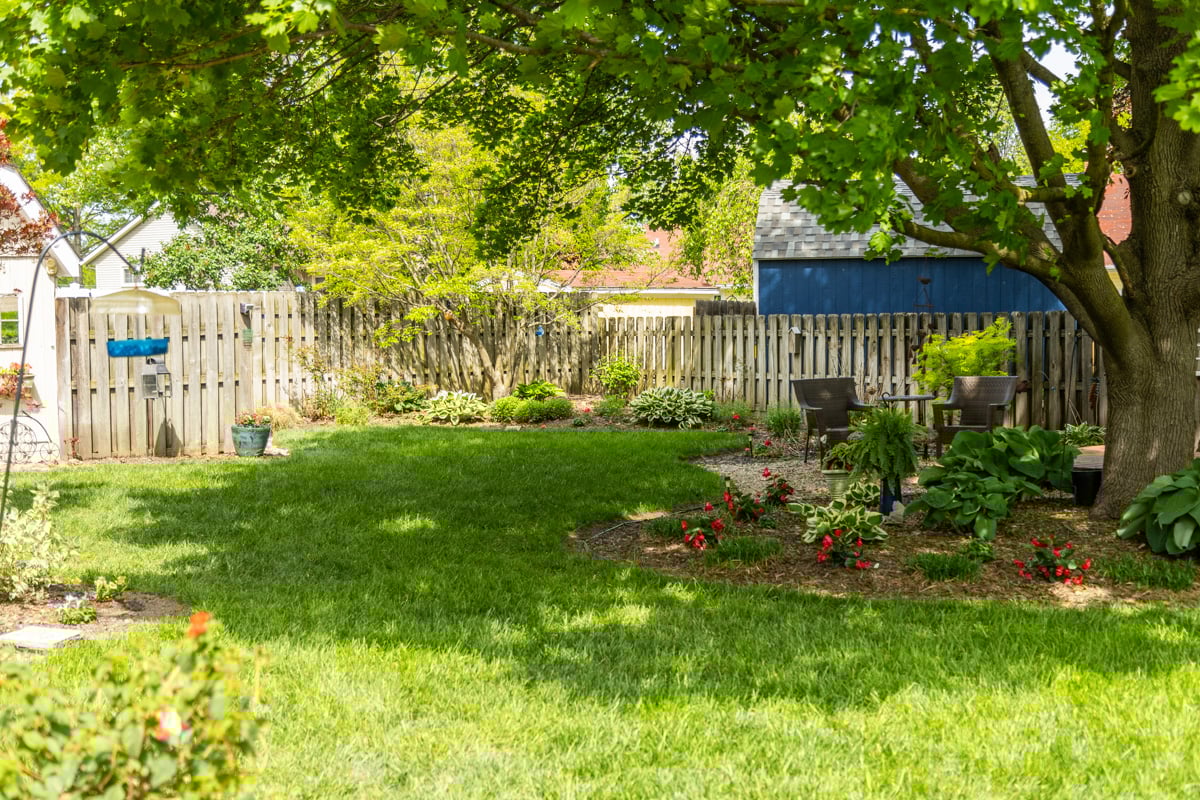
The truth is, there is no optimal solution. Even shade-loving turf types still require 4 to 6 hours of sunlight to reach their full potential.
This makes the answer complicated. While grass CAN grow in shade, it may not grow as well as you’d like it to…and that can be frustrating for a lot of people. That’s why, depending on your expectations, we may suggest grass alternatives if you’re not happy with your results. Any lawn care company that is promising you they’ll grow grass in shade might not be setting you up with realistic expectations.
How Much Sun Do Indiana Grasses Need?
You might be wondering, "How much sun does grass need?" Generally speaking, most Indiana grass types require at least 4 to 6 hours of sunlight per day. That’s true even if they can tolerate some shade.
Some grass types don’t require full sun and will still grow with indirect/filtered light. Some of the best shade-tolerant grass types are Fescues.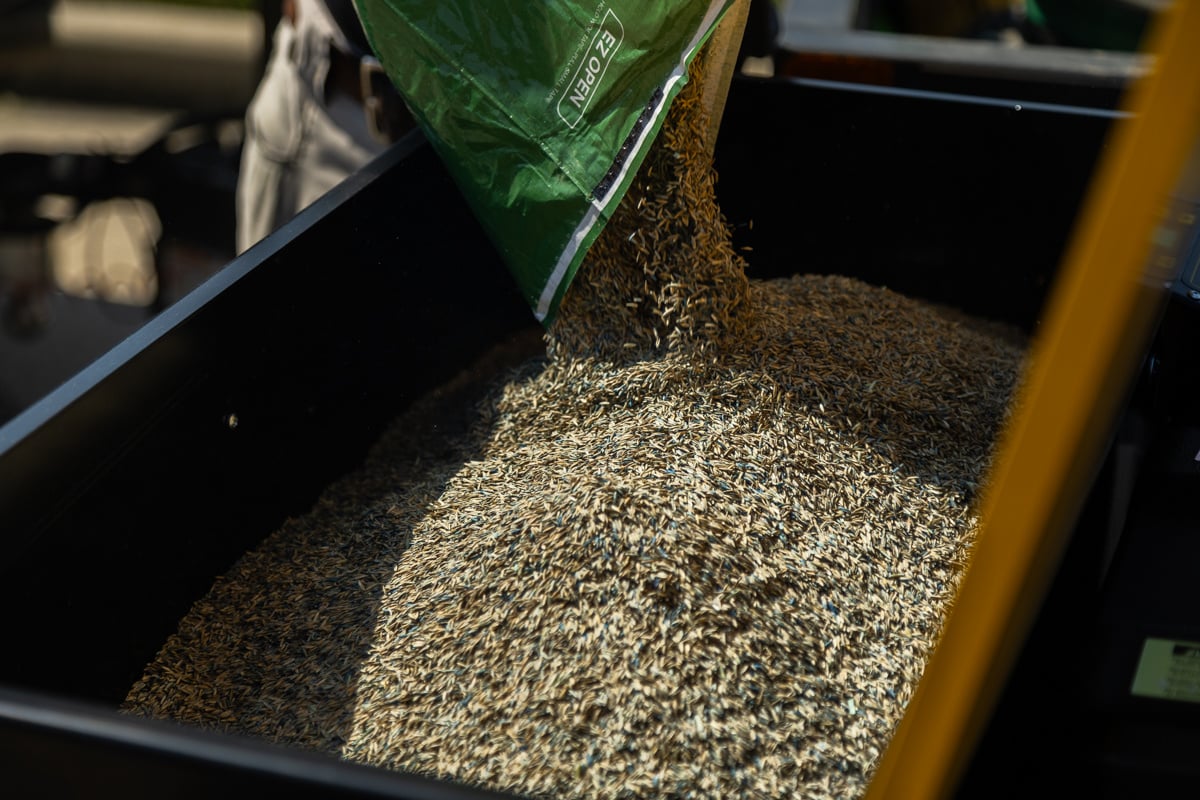
But other grass types, like Kentucky Bluegrass and Zoysia, require full sun for a minimum of 6 hours. If you have one of these grass types growing in a shaded area, they’re going to struggle.
At Shades of Green, we seed with our custom blend of Turf Type Tall Fescue, which will tolerate shade and still grow with 4 to 6 hours of indirect sunlight. It’s a superior turf type for a number of reasons including a higher tolerance to disease, drought, heat, and other tough conditions. Our custom blend also delivers that beautiful green color that homeowners are proud to show off.
The Connection Between Shade and Lawn Problems
All plants, including grass, require sunlight to survive and thrive. Shade creates a really tough environment for grass, even if it’s a “shade-tolerant” variety.
Because grass uses sunlight for the photosynthesis process, grass that is grown in shady conditions might be thinner and also not as healthy. That can potentially make it more susceptible to problems like disease and pests.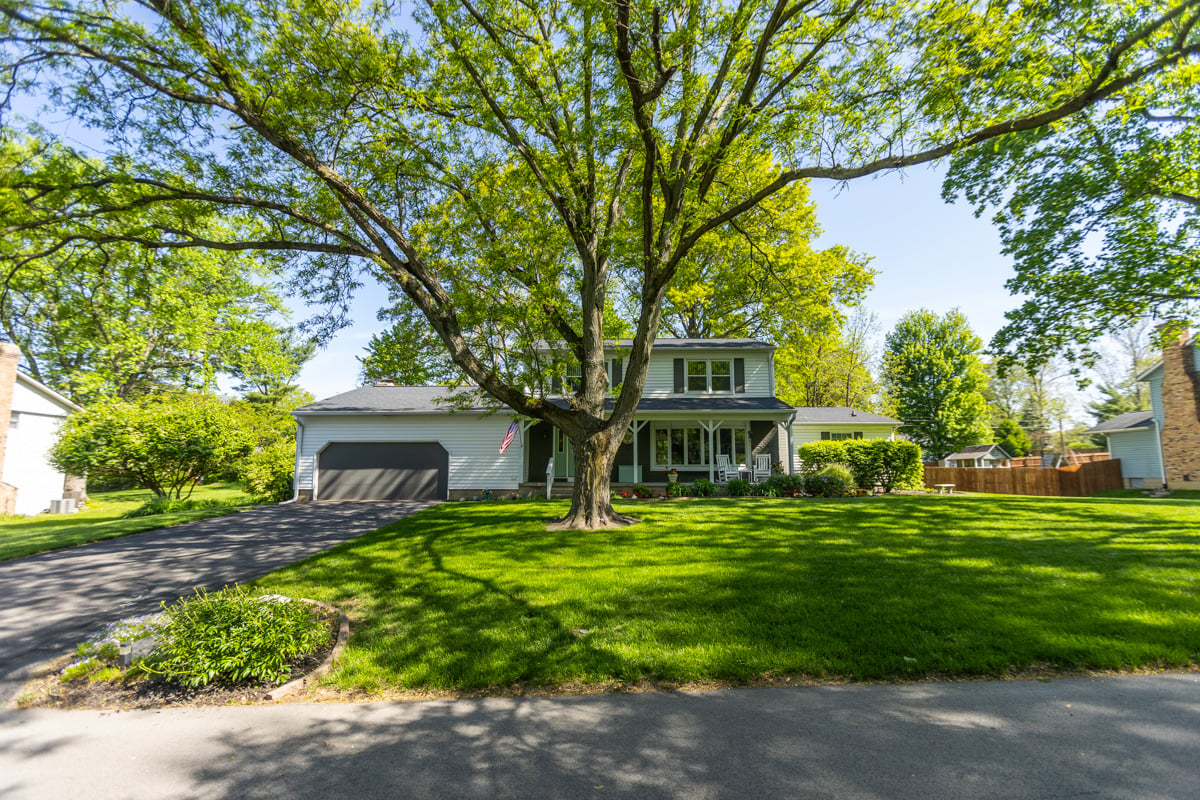
If it’s heavy shade, you might even start to notice bare patches as grass simply can’t survive (especially if it’s a sun-loving grass type).
Grass that doesn’t have regular access to full sunlight might also take longer to dry out, which can create problems with lawn fungus, moss, and water-loving weeds.
When homeowners see weeds, lawn disease, and patchy areas, they might be inclined to blame their lawn care company. But it’s important to understand that shade creates very challenging growing conditions for your lawn.
This is one of the key benefits to working with a lawn care company that is going to be realistic about your options. In some cases you might need to make the tough decision: Trees or grass? If your trees are really important to you and you love your shady lawn, you might need grass alternatives in the shadiest spots.
Best Grass Types for Shady Areas in Indiana
Fescues are the best grass in Indiana for under trees and in shady spots.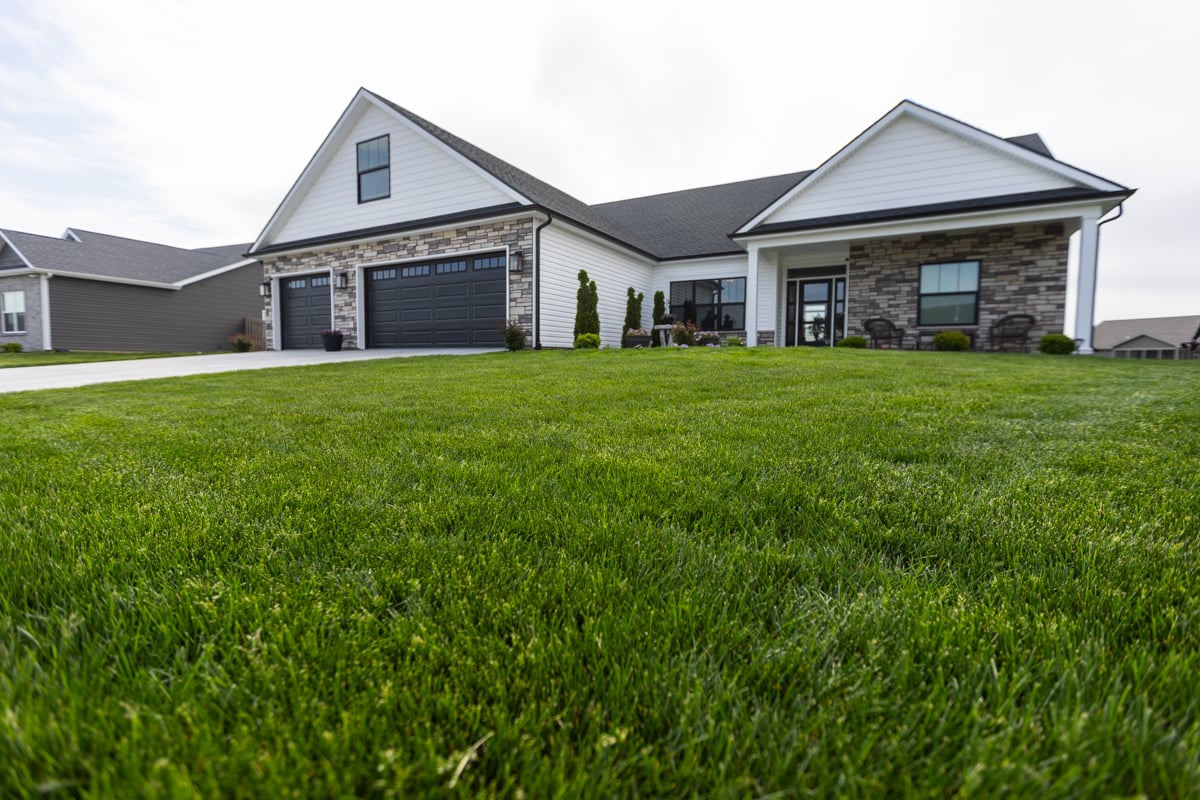
This cool-season grass type naturally evolved under forest canopies and can tolerate the filtered sunlight that it receives through trees. Fine Fescues tolerate the most shade but are not as hardy as Turf Type Tall Fescue, which is what we choose as the best grass type for Indiana lawns.
Not only can Turf Type Tall Fescue handle partial shade, but it can also stand up to lawn problems and create the dense and lush lawn that homeowners desire.
At Shades of Green, we’ve created the optimal grass type for our clients’ lawns with a custom blend of Turf Type Tall Fescue. It will perform well in the sun but will also tolerate your shady spots.
When is Grass Not the Best Option?
Whether or not grass is right in your shaded areas comes down largely to your expectations. If you’re okay with accepting that the lawn will probably always be thin and patchy in those spots, then you might be fine with what you have.
But if you are bothered by those thin and patchy areas, then it might be time to try an alternative solution.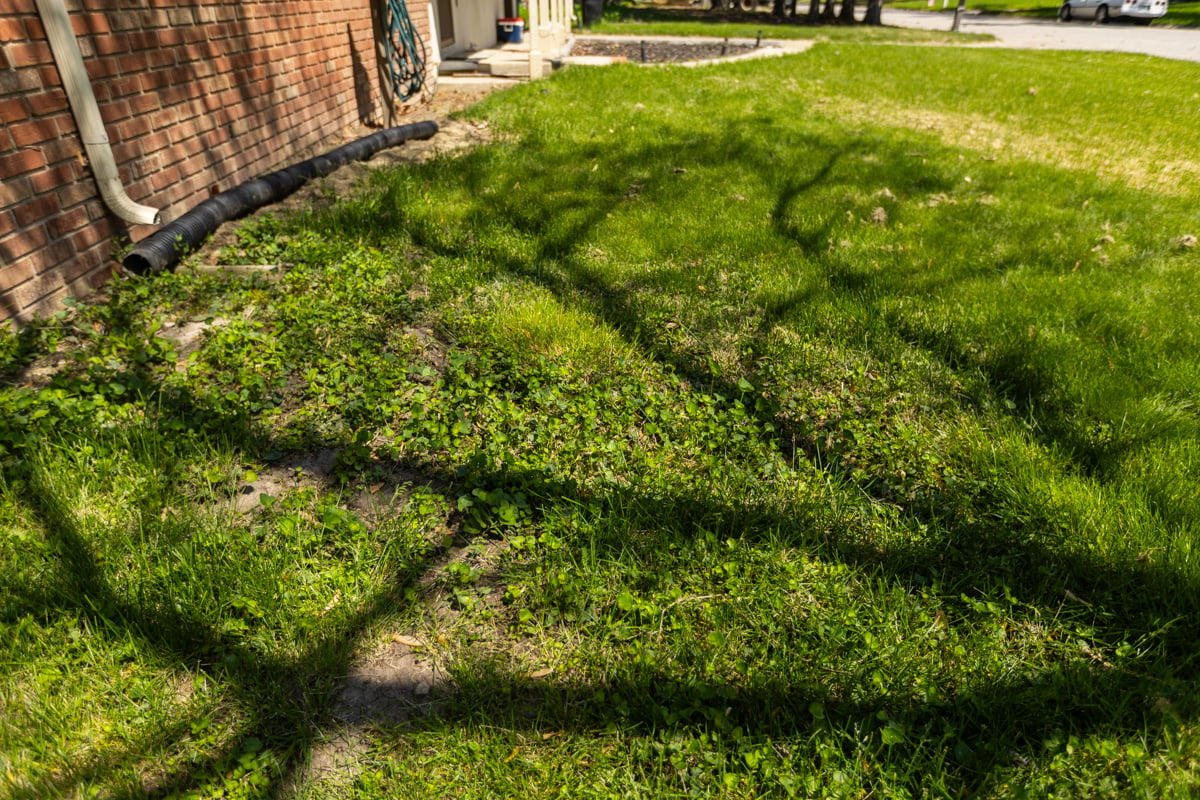
Often, we tell our clients they can try aerating and seeding those shaded spots. Then, if they don’t perform as well as they’d like, it might be time to try an alternate option to grass in that space. Here are a few ideas for alternatives.
Prune your trees for more sunlight
It’s possible that you could have more luck growing grass in shade if you have your trees pruned to allow more sunlight in. Over time, a tree’s canopy can become quite thick, and less sunlight will begin reaching the lawn. Tree pruning with the intention of allowing more light onto the lawn is a valuable solution.
Extend your mulch rings
Creating mulch rings around your trees (and making sure they extend into the shaded areas) is often the best solution when you cannot grow grass in shade. Mulch is already great for your trees (it helps protect the roots and retain moisture), and it eliminates the concerns over grass not growing in these spots.
Plant shade-loving plants
If you really love having greenery in the yard and you don’t just want extended mulch areas under trees, you could also consider some shade-loving plants. Hostas perform well in shady areas and will still give you some greenery in these non-lawn areas.
Tree removal
Of course, if you really want a thick and thriving lawn, you could also consider eliminating the shade by removing trees. As we said, we’ll always be honest with our clients, and sometimes it comes down to a tough question: Do you really love your trees or do you want a uniform and thriving lawn? If it’s the latter, then tree removal could be the way to go.
FAQs About Growing Grass in the Shade
Hopefully, this article has provided some realistic information on how to grow grass in shade. As much as we wish we could say there was a magic-bullet answer, that’s simply not the case. Before we wrap up, let’s recap a few key points and answer some of your most commonly asked questions.
How much sunlight does grass need to thrive vs just survive?
Most grasses require 4 to 6 hours of sunlight. If it’s a sun-loving grass type like Kentucky Bluegrass or Zoysia, it’s going to require 6+ hours of full sun. But if it’s a shade-tolerant grass type, like a Fescue, 4 to 6 hours of filtered light should work.
As we’ve mentioned, grass may not fully thrive in the shade and depending on your expectations, you may need to consider a grass alternative, like mulch.
What grass types work best in the shade?
Fescues are the best grass for shade. Fine Fescues tolerate the most shade but are not as hardy to the Indiana climate and other pressures as Turf Type Tall Fescue.
Why does the grass under my tree struggle the most?
All grass types require sunlight which is why grass growing under trees is going to struggle in comparison to the rest of the lawn. Sunlight is required for photosynthesis to occur and shaded areas tend to stay wet for longer, making it difficult for roots to grow deeper.
When to Consider Professional Help from Shades of Green
Whenever it comes to troubleshooting problems with the lawn, we always recommend calling in a pro. You shouldn’t have to figure all of this out on your own. One of the key benefits of choosing professional lawn care in Lafayette and nearby areas is that you’ll have an expert on your property helping you make decisions. At Shades of Green, we also provide services in Carmel, Noblesville, Westfield, and Zionsville.
Seeding and lawn care here in Indiana can get complicated very quickly, but you don’t have to figure it out on your own. Whether your lawn needs repair, thickening, or a total turnaround, a pro can help guide you toward the right timing and approach for the best long-term results.
Plus, growing grass is about more than just tossing down some seed and calling it a day. You’ll also need to implement ongoing lawn care treatments that help maintain the health of your turf.
We’re here to help! At Shades of Green, you can count on us to provide helpful advice and recommendations while also supporting your lawn with the treatments it needs. That means more time enjoying your lawn and less time stressing about it.
Ready to get your lawn on track this season? Get started by filling out our contact form for your quote.
Envision a Brighter Future for Your Lawn

About Cory Overman
Cory is the heart and soul of Shades of Green. His dedication to doing right for our customers has been the driving force behind the company's success. With a degree in Turf Science from Purdue University, Cory continually strives to craft the best treatment plans using the latest technologies and innovative products, ensuring top-notch results for every client.